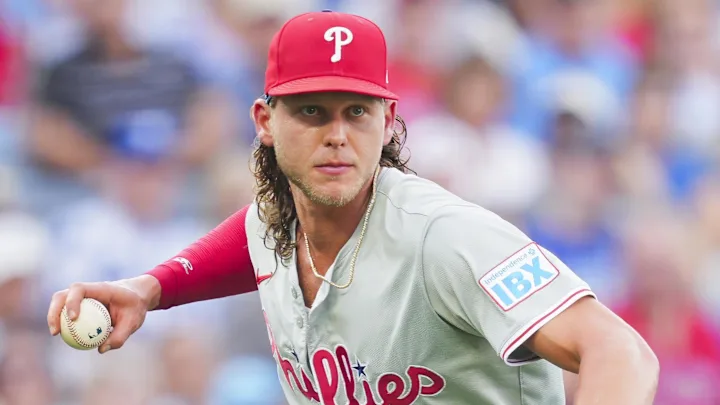
The name Alec Bohm Trade sparks a fascinating and divided conversation among Philadelphia Phillies fans and baseball analysts alike. Since his electrifying debut in 2020, where he looked like a natural-born hitter destined to anchor the lineup for a decade, the narrative around Bohm has been a rollercoaster. There have been moments of sheer brilliance at the plate, juxtaposed with prolonged defensive struggles that have been painfully visible on the sport’s biggest stages. This combination alec bohm trade of tantalizing potential and tangible flaws has made the concept of an Alec Bohm trade one of the most persistent and intriguing subplots surrounding the Phillies’ long-term team-building strategy. Is he a core piece you build around, or is he a valuable, marketable asset whose departure could address other glaring needs on the roster?
To understand the complexity of this situation, we have to look beyond the simple batting average or error count. It involves a deep dive into the Phillies’ current competitive window, the financial commitments they have made to other stars, the emerging talents within their farm alec bohm trade system, and the cold, hard calculus of baseball economics. A decision of this magnitude isn’t made in a vacuum. The Phillies, with a championship-or-bust mentality fueled by a massive payroll and the passionate Philadelphia fanbase, must weigh every move against its ability to deliver a World Series title. Where does Alec Bohm Trade fit into that puzzle? Is his offensive upside so critical that the team can afford to carry his defensive limitations, especially when the alternative could be acquiring a package of alec bohm trade players that solidifies multiple areas? This article will dissect every angle of the Alec Bohm trade speculation, providing alec bohm trade a comprehensive look at the arguments for and against, the potential suitors, and the ultimate factors that will decide his fate in red pinstripes.


The Rise and Stumble of Alec Bohm
When the Phillies selected Alec Bohm Trade with the third overall pick in the 2018 MLB Draft, they believed they were getting a franchise cornerstone. A product of Wichita State University, Bohm was lauded for his advanced hitting approach, his raw power alec bohm trade to all fields, and a plate discipline that seemed well beyond his years. He rocketed through the minor leagues, and his August 2020 debut was nothing short of storybook. In a shortened season devoid of fans for the most part, Bohm’s bat provided a spark. He alec bohm trade finished his rookie campaign with a .338 average and an .881 OPS, landing fourth in the National League Rookie of the Year voting. In that small sample size, he looked like the pure, contact-oriented hitter the Phillies had been craving, a perfect complement to the sluggers like Bryce alec bohm trade Harper and Rhys Hoskins in the middle of the order.
However, the 2021 season brought a harsh reality check. The league adjusted to Bohm, and he struggled mightily to counter-adjust. His batting average plummeted, his swing decisions became questionable, and, most glaringly, his defense at third base became a significant liability. The low point came in a nationally televised game against the Milwaukee Brewers, where he committed three errors in a single inning, a moment that visibly shook his confidence and was captured by cameras for the world to see. His subsequent, emotional comment to manager Joe Girardi, “I fucking hate this place,” though later clarified as a moment of frustration with his own performance, became a defining narrative of his sophomore slump. The promise of his rookie year seemed a distant memory, and questions arose about whether he could mentally handle the pressures of playing in a city as demanding as Philadelphia.
The following seasons, particularly 2022 and 2023, became a story of resilience and gradual improvement. Bohm worked tirelessly to rebuild both his swing and his defensive fundamentals. alec bohm trade The results at the plate were encouraging; he cut down on his strikeouts, started using the opposite field with more authority, and evolved into a reliable run-producer. He led the team in RBIs for significant portions of the season, proving he could deliver in clutch situations. Yet, the defensive questions never fully dissipated. While his error count decreased and he made some spectacular plays, the underlying metrics continued to paint him as a below-average defender at the hot corner. This created a fundamental alec bohm trade tension within the organization: his bat was clearly valuable enough to be in the lineup every day, but his glove at third base was potentially costing the team runs and, in high-leverage playoff games, could be exposed.
The Case for Trading Alec Bohm

From a purely analytical standpoint, the arguments for the Phillies to explore an Alec Bohm trade are compelling and rooted in both roster construction and asset management. The core of the argument is that Bohm’s value may never be higher than it is right now. He is a young, cost-controlled, above-average major league hitter who is arbitration-eligible for the first time. For many teams, especially those in a rebuilding phase or looking for a long-term solution at first or third base, that profile is incredibly attractive. By packaging him in a deal, President of Baseball Operations Dave Dombrowski could potentially address one of the team’s more pressing, long-term needs.
One of the most significant needs is a true, plus-defensive shortstop. Since the departure of Jimmy Rollins, the position has been a revolving door. Trea Turner was signed to a massive contract to solve that, but his own defensive inconsistencies and the lack of a reliable backup plan highlight a systemic weakness. Trading Bohm could allow the Phillies to acquire a high-end, defensive-minded shortstop prospect who is major-league ready or a young, established player, thereby solidifying the entire infield defense for years to come. Alternatively, the return could be focused on the pitching staff. The Phillies’ starting rotation, while excellent at the top, has questions regarding depth and long-term sustainability. A Bohm-centered trade could net a young, controllable starting pitcher with a high ceiling, someone who could slot into the middle of the rotation and provide financial and performance flexibility as older, more expensive pitchers’ contracts expire.
Furthermore, the Phillies have a potential internal replacement waiting in the wings, which makes the idea of a trade more palatable. Weston Wilson, and more notably, prospect Aidan Miller, the team’s first-round pick in 2023, represent the future of the corner infield. If the organization believes that Miller’s timeline could align with Bohm’s departure, it mitigates the risk of creating a new hole. Trading Bohm from a position of perceived organizational depth to fill a position of undeniable organizational weakness is the kind of shrewd, forward-thinking move that championship teams often make. It’s a cold calculation, but the goal is a World Series, and sentimentality rarely wins rings.
The Case Against Trading Alec Bohm
For all the logical arguments in favor of a trade, the case for holding onto Alec Bohm Trade is equally, if not more, persuasive, especially when considering the human element and the specific context of the Phillies’ current lineup. The most powerful argument is the sheer difficulty of finding consistent, right-handed power bats. In an era dominated by strikeouts and bullpen specialization, a player like Bohm who makes consistent contact, hits for a respectable average, and drives in runs is an increasingly rare commodity. His 2023 season, where he was among the team leaders in RBIs and consistently came through with runners in scoring position, demonstrated a value that isn’t easily replaced.
Let’s not forget the Bryce Harper factor. Harper’s permanent move to first base was a seismic shift for the Phillies’ roster construction. It solved one problem—finding a long-term replacement for Rhys Hoskins—but it also effectively blocked Bohm’s most logical defensive escape route. With Harper at first, Bohm is locked in at third base for the foreseeable future. This makes the argument for keeping him even stronger, as his bat is now even more vital from the third base position. If the Phillies were to execute an Alec Bohm trade, they would be creating a new hole at third base that they are ill-equipped to fill from within, at least in the immediate term. The free-agent market for third basemen is typically alec bohm trade thin and expensive, making an internal replacement a risky proposition.
Beyond the tactical and roster-based reasons, there is the matter of Bohm’s personal alec bohm trade growth and his connection to the team’s identity. He has openly spoken about overcoming his early struggles and learning to thrive in Philadelphia, a city that respects effort and resilience above alec bohm trade all else. He has become a well-liked teammate and a steady, if not flashy, presence in the clubhouse. Trading a player who has worked through adversity and has become a productive member of a contending team can sometimes send the wrong message to the rest of the roster. It can disrupt chemistry and create an environment where players feel like assets rather than people. In a sport as mentally grueling as baseball, that intangible chemistry can be the difference between a good team and a great one.
The Phillies’ Roster Construction and Payroll Reality
To fully grasp the Alec Bohm Trade trade speculation, one must understand the landscape of the Phillies’ roster and their financial commitments. Under the ownership of John Middleton and the leadership of Dave Dombrowski, the Phillies have unequivocally entered a “win-now” phase. This is evidenced by a payroll that consistently ranks among the top in baseball, featuring megadeals for Bryce Harper, Trea Turner, Zack Wheeler, and J.T. Realmuto. These contracts are designed to maximize a competitive window that is wide open right now, but they also create a financial inflexibility for the future. The money alec bohm trade is heavily concentrated in a few superstar players.
This concentration of resources makes cost-controlled, productive players like Alec Bohm Trade absolutely invaluable. While he will see his salary rise through the arbitration process in the coming years, he will still represent a significant bargain compared to his potential production on the open market. For a team brushing up against the luxury tax threshold, having a player of Bohm’s caliber earning a fraction of his worth is not just a luxury; it’s a necessity. It allows the front office to allocate funds to other areas, such as bolstering the bullpen or adding rotational depth. Trading him away would mean losing one of their most efficient contracts, and the players acquired in return would likely need to provide similar surplus value to make the deal worthwhile.
Looking at the infield configuration, the future is both set and uncertain. With Harper at first, Turner at short, and Realmuto behind the plate, three spots are locked in. Second base is currently manned by Bryson Stott, another young, cost-controlled player who has proven to be a valuable asset both offensively and defensively. This leaves third base as the one infield position without a definitive, multi-year superstar commitment, which is why it’s the focus of so much speculation. The organization alec bohm trade must decide if Bohm is the answer there, or if the defensive shortcomings are too great to ignore in their pursuit of a championship. The payroll reality means they cannot simply go out and alec bohm trade sign a top-tier free-agent third baseman; they must be smarter and more resourceful, which often leads to exploring the trade market.
Potential Trade Suitors for Alec Bohm
If the Phillies were to seriously entertain the idea of an Alec Bohm Trade trade, several teams would immediately emerge as logical landing spots. The ideal trade partner would be a team that values Bohm’s bat more than it is concerned about his defense, perhaps a club that could immediately slot him in at first base or is confident it can improve his work at third. It would also be a team with a surplus of the very assets the Phillies crave: young, controllable pitching or a high-end middle infield prospect.
One intriguing potential suitor is the Seattle Mariners. The Mariners possess one of the best young pitching staffs in baseball and have a clear need for offensive upgrades, particularly from the right side of the plate. A deal centered around a pitcher like Logan Gilbert or Bryce Miller could be incredibly appealing to the Phillies, giving them a long-term, cost-controlled arm to pair with Zack Wheeler and Aaron Nola. From Seattle’s perspective, adding a bat like Bohm’s to a lineup featuring Julio Rodríguezalec bohm trade would be a major step forward in their quest to become consistent contenders.
Another American League team that makes sense is the Chicago White Sox. As they look to reset their roster, they have a glaring hole at third base and a need for young, controllable hitters to build around. The White Sox have a deep farm system, and the Phillies could target a package of prospects headlined by a promising shortstop or a power arm. The Miami Marlins, perennially in search of offense, could also be a fit, especially given their own wealth of young pitching talent. A deal for a pitcher like Edward Cabrera or Trevor Rogers could be the foundation of a trade, helping the Marlins add a cornerstone bat while giving the Phillies a much-needed rotational piece for the future.
It’s also worth considering a team like the San Francisco Giants. The Giants are always looking for ways to add professional hitters to their lineup, and Bohm’s profile fits what they often seek. They have prospects and young major league talent that could be of interest to Philadelphia. The key in any trade discussion would be the Phillies’ ability to identify a partner whose organizational strengths align perfectly with their own weaknesses, turning a surplus in one area into a solution for another.
What Would a Trade Package Look Like?
Speculating on the exact return for an Alec Bohm Trade trade is a complex exercise, but we can outline the general framework of what the Phillies would demand and what a competing team might be willing to offer. Bohm’s value is that of a very good, but not elite, young major league hitter with several years of team control remaining. He is not a rental player, which boosts his trade value significantly.
The Phillies, operating from a position of trying to win now, would almost certainly be seeking major league-ready or near-ready talent in return, rather than a package of low-level, high-risk prospects. A one-for-one swap for an established player of similar age and control is unlikely. A more probable scenario would be a two-for-one or three-for-two deal that addresses multiple needs. For example, a theoretical trade package could look like this:
| Phillies Receive | hypothetical Team Receives |
| A young, MLB-ready starting pitcher (e.g., a team’s #3/4 starter with upside) | Alec Bohm |
| A top-100 prospect infielder (specifically a defensive-minded shortstop) | A mid-level prospect |
| A bullpen arm with high-velocity stuff |
This kind of package would allow the Phillies to immediately plug two holes on their roster—adding rotational depth and a future infield solution—while the other team acquires a proven bat to build their lineup around. The inclusion of a mid-level prospect from the Phillies’ side could help balance the deal if the return is particularly strong. The ultimate goal for Dave Dombrowski would be to achieve what alec bohm trade is known as “roster balance,” turning one valuable asset into two or three assets that create a more complete and resilient team, better equipped for a deep postseason run.
The Fan Perspective and Media Narrative
In Philadelphia, sports are not just a pastime; they are a passion, and the media coverage is intense and unrelenting. The narrative surrounding an Alec Bohm trade is therefore shaped as much by public perception as by on-field performance. Bohm’s journey has been a public one, from the savior-like hype of his debut to the frustration of his defensive miscues and his subsequent redemption arc. This has created a divided fanbase. One segment sees the .280 average, the clutch RBIs, and the hard-hit balls and cannot fathom why the team would trade a young, homegrown hitter with his potential. Another segment sees every bobbled ground ball, every slightly late throw to first, and believes he is a liability that will ultimately prevent the team from winning a championship.
This division is fueled by a vibrant and often loud sports talk radio and social media ecosystem. Callers and posters debate his merits with a fervor usually reserved for quarterbacks or star pitchers. The local media plays a significant role in this, with some columnists advocating for a trade to maximize his alec bohm trade value and others arguing that his offensive production is too precious to give up. The narrative is never static; it shifts with every diving stop, every error, every key double into the gap. This constant churn of opinion creates a pressure cooker environment that the front office undoubtedly feels, even if they claim to ignore the noise.
The organization itself has been careful in its public messaging about Bohm. Managers and front office officials have consistently praised his work ethic and his bat, often downplaying or expressing confidence in his ability to improve defensively. This is a classic strategy to maintain a player’s trade value—you don’t publicly criticize an asset you might want to move. However, their actions, such as occasionally pulling him for defensive replacements in late innings, also speak volumes. They are aware of the limitations, even as they publicly support the player. Navigating this public relations aspect is a subtle but important part of the entire Alec Bohm trade dynamic, as the Phillies must manage alec bohm trade both the morale of their player and the perceptions of the market.
The Verdict from Baseball Insiders
What do the experts and insiders around baseball think about the likelihood of an Alec Bohm trade? The consensus view, particularly from national writers and analysts, is that while the Phillies will inevitably listen to offers—as they should for virtually every player on their roster—a trade is not considered the most probable outcome in the immediate future. The reasoning typically hinges on the “devil you know” principle. The Phillies know exactly what they have in Bohm: a .280 hitter who will drive in 90-100 runs and play below-average but passable defense at third. Replacing that production, especially at his cost, is far more difficult than it appears.
Many insiders point to the Bryce Harper position switch as the single biggest factor that has reduced the likelihood of a trade. As one anonymous NL executive was quoted saying, “With Harper at first, where does Bohm go? You trade him, and now you have a massive hole at third and no clear internal solution. That seems like a step backward for a team that’s all-in on winning now.” The executive’s sentiment echoes a widely held belief that creating one problem to solve another is rarely a successful team-building strategy for a contender. The Phillies’ window is open now, and stability at the corner infield positions is crucial.
That said, insiders also agree that the phone lines are never dead. If a team were to come to Dave Dombrowski with an offer that includes a young, controllable starting pitcher who can impact the rotation immediately, coupled with a prospect that addresses a long-term need, the conversation would become very serious very quickly. Dombrowski has a history of making bold, unexpected moves, and he is not sentimental when it comes to improving his roster. The prevailing wisdom is that it would take an overpay—a deal that clearly and unequivocally makes the Phillies better both in the short and long term—to pry Bohm away from Philadelphia. Until such an offer materializes, the status quo is the most likely path.
Frequently Asked Questions About a Potential Alec Bohm Trade
Why would the Phillies even consider trading Alec Bohm?
The Phillies would consider an Alec Bohm trade primarily as a way to improve overall roster construction. The thinking is that while Bohm is a good hitter, his defensive limitations at third base could be a liability for a championship-caliber team. By trading him, the Phillies could potentially address a more critical need, such as acquiring a young, top-of-the-rotation starting pitcher or a defensive stalwart at shortstop or center field. It’s a classic case of leveraging a strength to address a weakness, a common practice for general managers trying to build a balanced and complete team capable of winning in October.
What is Alec Bohm’s current contract situation?
Alec Bohm Trade is under team control through the arbitration process. He recently passed his first year of arbitration eligibility and is not scheduled to become a free agent until after the 2026 season. This means any team that trades for him would be acquiring his services for several seasons, making him a more valuable trade asset than a player on the verge of free agency. His relatively low salary compared to his production is a key part of his appeal on the trade market.
If the Phillies trade Bohm, who would play third base?
This is the million-dollar question and the biggest obstacle to a trade. Currently, there is no clear, everyday replacement on the roster or in the high levels of the minors. The Phillies would likely have to find a solution externally, either by signing a free agent—which would be difficult given financial constraints—or by acquiring a third baseman as part of the return in the Bohm trade itself. This complicates any potential deal, as it means the Phillies aren’t just looking for *a* player in return; they are potentially looking for a new third baseman, or at least a viable stopgap, as part of the package.
How have other similar trades worked out in MLB history?
History provides mixed results for trades involving young, promising hitters like Bohm. Sometimes, the team trading the hitter loses the deal badly if the player continues to develop into a star elsewhere. A famous example is the Red Sox trading Jeff Bagwell to the Astros for a reliever, a move still lamented in Boston. Conversely, teams sometimes sell high at the perfect time. The Cubs trading Gleyber Torres to the Yankees for Aroldis Chapman was a painful short-term loss but was instrumental in helping the Cubs win the 2016 World Series. The outcome of an Alec Bohm trade would hinge entirely on the return and how both Bohm and the acquired players perform in the years following the deal.
Conclusion
The speculation surrounding an Alec Bohm trade is more than just idle rumor-mongering; it is a complex and multi-layered discussion that sits at the very heart of the Philadelphia Phillies’ present and future. It forces us to weigh raw offensive production against defensive reliability, cost-controlled assets against superstar contracts, and immediate needs against long-term planning. Bohm represents both a tremendous success story of player development and a lingering question mark about defensive fit on a championship roster. The arguments for keeping him are powerful, rooted in the sheer difficulty of replacing his bat and the roster instability his departure would create. The arguments alec bohm trade for trading him are equally logical, centered on the opportunity to maximize his value and address more critical weaknesses on the team.
In the final analysis, the most likely scenario, at least for the immediate future, is that Alec Bohm Trade remains a Philadelphia Phillie. The combination of his offensive contributions, his cost-effectiveness, and the lack of a clear internal replacement makes a trade a high-risk maneuver for a team in its competitive prime. The Bryce Harper position switch has effectively cemented Bohm’s role, for better or worse. However, in the world of baseball, certainty is a luxury. The front office, led by the ever-opportunistic Dave Dombrowski, will continue to listen and would undoubtedly pull the trigger on a deal alec bohm trade that they believe unequivocally makes the Phillies a better, more balanced, and more formidable World Series contender. Until that specific offer arrives, Alec Bohm will continue to be a central figure in Philadelphia, his every play fueling the ongoing debate about his ultimate place in the team’s quest for a title.
You may read also