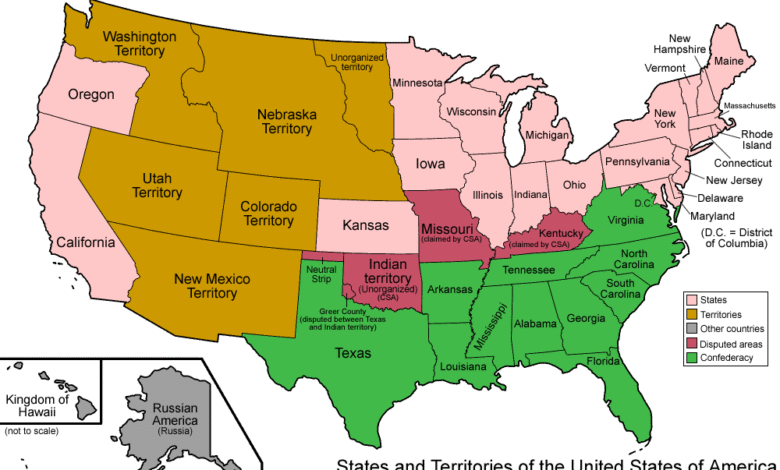
Imagine standing on a windswept Colorado plain, the silence broken only by the whisper of sagebrush. It’s a landscape that feels timeless, yet if you listen closely, you can almost hear the echoes of a bygone era—the distant bugle call, the creak of wagon wheels, and the hushed conversations of soldiers and settlers. This is the realm of Fort Fort Winslow Colorado Map a name that resonates deeply with historians, adventurers, and anyone fascinated by the American West. But where exactly fort winslow colorado map was this outpost? How do you find a place that has largely returned to the earth? The answer lies not in a simple set of GPS coordinates, but in a journey that begins with a Fort Winslow Colorado map.
This article is your definitive guide to understanding and locating this historical site. We fort winslow colorado map will delve into the rich history of Fort Fort Winslow Colorado Map exploring its purpose, its inhabitants, and its ultimate fate. More importantly, we will act as your cartographer, guiding you through the historical and modern mapping resources that can transform a vague notion of a forgotten fort into a tangible destination. Whether you’re planning a pilgrimage to stand on the very ground fort winslow colorado map where history unfolded, a researcher piecing together local narratives, or simply a curious mind lost in the romance of the Old West, understanding the layout of Fort Winslow is your first step. A map is more than just lines on paper; it’s a portal. It connects us to the past, allowing us to visualize the strategic decisions that placed a fort in a specific valley, to trace the routes of supply wagons, and to comprehend the daily lives of those who called this remote post home. So, let’s unfold the map and begin our exploration into the heart of Colorado’s frontier history.
The Historical Significance of Fort Winslow Colorado Map
To truly appreciate the search for a Fort Winslow Colorado Map Colorado map, one must first understand why the fort was there at all. Fort Winslow was not one of the large, permanent masonry fortresses often depicted in films. It was a classic example of a temporary frontier army post, established during a period of immense tension and transition in the Colorado Territory. Its story is inextricably linked to the broader narrative of westward expansion, the discovery of gold, and the resulting conflicts with Native American tribes who had called these lands home for centuries. The fort was a tangible manifestation of the U.S. government’s strategy to protect its burgeoning interests and its citizens, however fraught that history may be.
The establishment of Fort Winslow Colorado Map typically coincided with the Colorado Gold Rush and the period just following the Pike’s Peak Gold Rush of 1858-1859. As thousands of prospectors and settlers flooded into the region, tensions with the Plains tribes, particularly the Cheyenne and Arapaho, escalated. The fort was strategically positioned, likely along a vital transportation route like the Smoky Hill Trail or near a tributary of a major river, to serve as a waystation and a protective garrison. Its primary functions were multifaceted: to provide a safe haven for travelers, to secure supply lines for miners, to serve as a base for cavalry patrols, and to act as a deterrent to potential attacks. The very existence of Fort Winslow, however temporary, represented a significant shift in the balance of power on the Colorado plains.
Life at fort winslow colorado map was far from glamorous. The soldiers stationed there, often volunteers or regular army infantry and cavalry, faced immense hardships. They endured harsh winters with biting winds, scorching summers with little shade, and the constant threat of isolation. The fort itself would have been a collection of log structures or perhaps even simple sod buildings—a barracks, a stable, a commander’s quarters, and a supply depot. Disease, boredom, and the psychological strain of frontier duty were constant companions. Despite these challenges, the men at Fort Winslow played a crucial role in the complex and often tragic story of Colorado’s settlement. Their daily patrols and mere presence shaped the patterns of migration and conflict, making the fort a key piece of historical infrastructure.
The legacy of Fort Winslow is complex. Like many frontier forts, it was active for a relatively short period, perhaps only a few years, before it was decommissioned. The reasons for its abandonment could have been strategic, as the frontier moved westward and the army consolidated its forces into larger, more permanent installations. Once abandoned, the structures of the fort would have quickly succumbed to the elements. Wood was repurposed by homesteaders, adobe melted back into the earth, and the land slowly reclaimed its own. Today, there are no grand monuments or reconstructed buildings at the site of Fort Winslow. Its physical presence has vanished, which is precisely why the historical record and, most importantly, the maps from that era are so incredibly valuable. They are the only keys we have to unlocking its story.
Deciphering the Cartography: Finding Fort Winslow on a Map
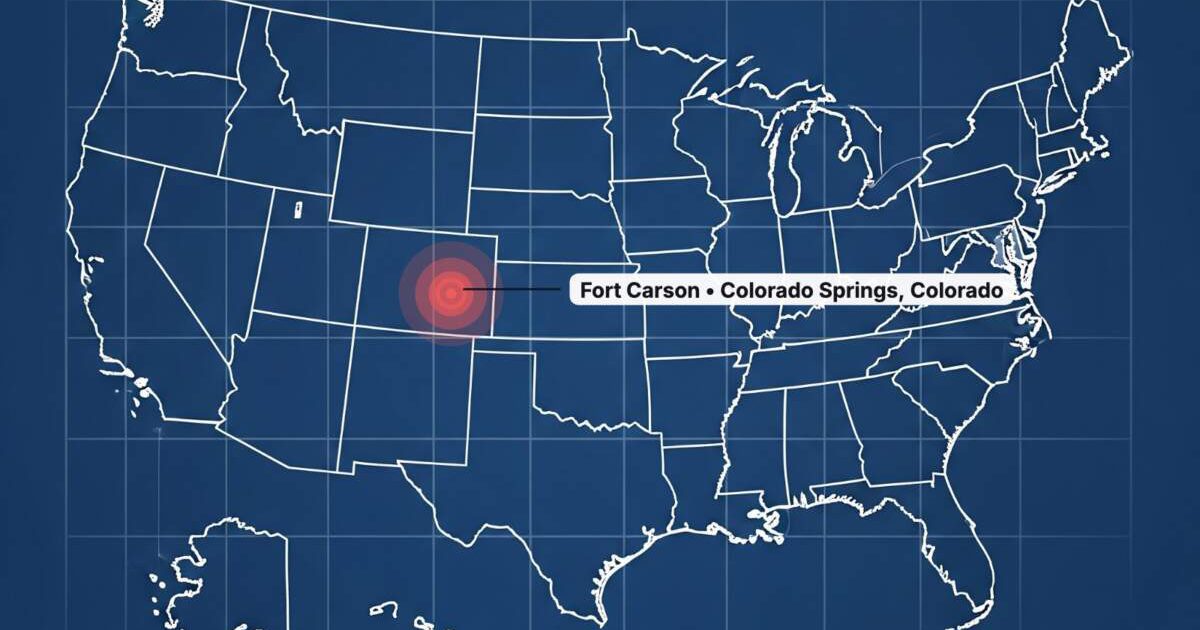
The quest to locate Fort Winslow on a map is a fascinating exercise in historical detective work. It requires understanding that the landscape of 19th-century Colorado was documented with different tools, different priorities, and different levels of accuracy than what we are accustomed to today. A modern map of Fort Winslow Colorado Map is not something you can pull up on a standard navigation app; instead, you must learn to read the cartographic clues left behind by army surveyors, railroad engineers, and early settlers. This process is not just about finding a dot on a map, but about interpreting the context that made that dot significant.
Historical maps from the 1860s and 1870s are the primary source for pinpointing the location of Fort Winslow. These can include official U.S. Army Corps of Engineers surveys, maps produced for territorial governments, and route maps created for stagecoach lines. On these documents, Fort Winslow would likely appear as a small, labeled symbol, perhaps a small square or a cluster of buildings. The key is to cross-reference multiple maps from the same period. One map might show the fort in relation to a river bend, while another might place it a specific distance from a known landmark like a butte or a crossroads. This cross-referencing helps to triangulate a more precise location and also verifies the fort’s existence against the historical record, ensuring it wasn’t a cartographic error or a proposed site that was never built.
When analyzing an old Fort Winslow Colorado map, pay close attention to the surrounding geographical features. The army did not place forts at random. They were strategically situated near fresh water sources, which is why you will often find them on riverbanks or near reliable springs. They were also placed along major trails to control movement. Therefore, when you find a map noting fort winslow colorado map look for the proximity of a river like the South Platte or the Arkansas, or a trail like the Smoky Hill Trail. Furthermore, understanding the topography is crucial. A fort would often be placed on slightly elevated ground for defensive purposes and to have a clear field of view. This geographical logic allows you to look at a modern topographic map and make educated guesses about where the fort might have been, even if the historical map is stylized or slightly inaccurate.
The transition from historical to modern mapping is the final step in this cartographic deciphering. Once you have a probable location from old maps, you can use modern tools to zero in on the site. USGS (United States Geological Survey) topographic maps are invaluable here. These detailed maps show the lay of the land with precise contour lines, allowing you to match the described terrain from historical accounts—a specific bluff, a confluence of creeks, a particular valley. By overlaying the historical data onto the modern topographic reality, you can move from a general area to a specific set of coordinates. This process transforms the abstract notion of “fort winslow colorado map” into a real, visitable place, connecting the paper trail of the past with the physical landscape of the present.
A Detailed Look at the Fort Winslow Layout and Grounds
While a simple dot on a map confirms a location, understanding the layout of Fort Winslow breathes life into that dot. It allows us to move beyond the “where” and into the “how” and “why” of daily existence at this remote military post. Reconstructing the fort’s blueprint is a challenging task, as no original architectural plans may have survived, but we can make highly educated assumptions based on standard army practices for temporary forts of that era and period descriptions. By piecing this together, we can mentally walk through the gates and understand the functional logic of the space.
A typical frontier fort like Fort Winslow was designed for utility and defense, not for comfort or aesthetics. The entire compound was likely arranged around a central parade ground. This open area was the heart of the fort, used for drills, formations, inspections, and even social gatherings. Surrounding this parade ground would have been the key structures. The commanding officer’s quarters were usually the most substantial building, often situated opposite the main gate to project authority. The enlisted men’s barracks, a long and rudimentary building, would house the soldiers in spartan conditions. Other essential buildings included a guardhouse, a stable for the cavalry horses, a blacksmith shop, a storehouse for supplies, and a hospital or sick bay.
The defensive features of the Fort Winslow grounds were paramount. Unlike the iconic stockade walls of earlier eastern forts, many posts on the high plains were “open forts,” lacking a continuous perimeter wall. This was because the primary threat was not a massed infantry assault but hit-and-run raids by highly mobile mounted warriors. Instead of walls, the defense relied on the strategic placement of buildings to create a defensive line, with loopholes for rifles in the walls. There would have been strategically placed blockhouses at opposite corners of the compound. These were two-story structures with overhanging second floors, allowing defenders to fire down on any attackers who managed to breach the perimeter. The entire layout of fort winslow colorado map was a testament to pragmatic military engineering adapted to the specific challenges of the High Plains.
To help visualize this, let’s consider a hypothetical reconstruction of the fort’s key features based on common layouts of the time.
| Feature | Description | Purpose & Significance |
| Parade Ground | A large, open, dusty or grassy area at the center of the fort. | The administrative and ceremonial center; used for roll call, drills, and a rare space for recreation. |
| Commanding Officer’s Quarters | A separate, slightly larger log or frame building, often with a porch. | Housing for the fort’s leader; also served as an office and meeting room for planning patrols and strategy. |
| Enlisted Men’s Barracks | A long, single-room building with a central fireplace, filled with bunks. | Home for the common soldier; a crowded, often uncomfortable space that fostered camaraderie and conflict. |
| Stables | A large, sturdy structure with haylofts and tack rooms. | Essential for housing the cavalry’s horses; the fort’s mobility and primary offensive power resided here. |
| Blockhouses | Two-story square towers at diagonal corners, with loopholed walls and overhanging upper floors. | Key defensive structures providing overlapping fields of fire to protect the fort’s perimeter from attack. |
| Storehouse | A secure, dry building, often with a raised floor to deter pests. | Held vital supplies: food, ammunition, uniforms, and fodder; the lifeline for the isolated garrison. |
| Blacksmith Shop | A soot-filled building with a forge, anvil, and bellows. | The maintenance hub for the fort; shoes horses, repaired tools, wagons, and weaponry. |
| Well | A deep, hand-dug well within the fort’s perimeter. | The most critical feature; a secure water supply was non-negotiable for survival in an arid environment. |
Planning Your Visit: The Modern fort winslow colorado map Site
For many history enthusiasts, the ultimate goal of studying a Fort Winslow Colorado map is to eventually stand on the historic ground itself. Visiting the site of a vanished fort is a unique and powerful experience, but it requires careful planning, respect, and managed expectations. This is not a typical tourist destination with paved paths and interpretive signs. It is a place of quiet reflection, where history is felt rather than seen, and your preparation will directly shape the quality of your visit.
First and foremost, it is essential to confirm that the site of fort winslow colorado map is located on publicly accessible land. Much of the land in eastern Colorado is privately owned ranchland. Trespassing is not only illegal but also disrespectful to the landowners. Your first step should be to use your modern mapping resources, such as a land management overlay on a GPS app or county plat maps, to determine the land status. If it is on private property, your only legal recourse is to attempt to contact the landowner and politely request permission. Be prepared for them to say no, as landowners have valid concerns about liability, disruption to livestock, and their own privacy. If the site is on land managed by the Bureau of Land Management (BLM) or a state trust, you are generally free to access it, but you should still check for any specific regulations or seasonal closures.
Once you have confirmed access, preparing for the journey is critical. The fort winslow colorado map site is in a remote and exposed area. You will need a reliable, high-clearance vehicle, as the roads may be unpaved, rough, or become impassable mud after a rainstorm. Your gear should reflect the environment: sturdy boots, a wide-brimmed hat, sunscreen, and significantly more water than you think you’ll need. The Colorado plains can be deceptively harsh, with intense sun, high winds, and rapidly changing weather. Bring multiple navigation tools—a fully charged phone with offline maps downloaded, a dedicated GPS device, and a physical paper map and compass as a backup. Cell service will be non-existent. Let someone know your detailed travel plans and expected return time. The romance of the Old West should not be mistaken for a gentle environment; it demands preparedness.
When you finally arrive, what will you see? You must set your expectations appropriately. You are not likely to find crumbling walls or reconstructed buildings. The fort winslow colorado map location today is probably a series of subtle depressions in the earth, perhaps a few scattered foundation stones, or nothing visible to the untrained eye at all. The real experience is one of atmosphere and context. Walk the area carefully and respectfully. Look at the landscape from a strategic perspective—see the view from the high ground, note the proximity to water, and imagine the fort laid out before you. This is where your prior research on the layout of Fort Winslow pays off, allowing you to visualize the parade ground, the barracks, and the blockhouses. You are not just looking at an empty field; you are using your knowledge to see the ghost of the fort that once stood there. Take nothing but photographs, and leave nothing but footprints.
The Role of Fort Winslow in the Wider Context of Colorado’s Frontier Forts
To view Fort Winslow in isolation is to miss a crucial part of its story. It was not a solitary beacon of civilization in a vast wilderness; rather, it was one node in a extensive network of military installations that stretched across the Colorado Territory and the American West. Understanding its relationship to other forts like Fort Lyon, Fort Garland, Fort Morgan, and the more famous Bent’s Old Fort provides a much richer, more strategic understanding of the U.S. Army’s efforts to control the region and facilitate westward expansion.
Fort Winslow existed as part of a defensive and logistical web. Its specific location of fort winslow colorado map was chosen not just for its immediate surroundings, but for its ability to communicate and support other forts. A message rider or supply wagon traveling from Fort Winslow would have a destination—another fort that served as a regional headquarters or a key resupply point. For instance, if a patrol from Fort Winslow encountered a large band of perceived hostiles, they would report this intelligence to a larger fort like Fort Lyon, which could then dispatch a stronger force. The forts were connected by a system of military roads and trails, creating a fragile but vital infrastructure across a daunting landscape. This network allowed for the movement of troops, the relay of information, and the projection of military power across vast distances.
Each fort in the network had a slightly different role, and Fort Winslow’s purpose complemented those of its neighbors. A larger fort like Bent’s Old Fort (initially a private trading post) was a major hub of commerce and diplomacy with Native American tribes. Fort Garland, guarding the San Luis Valley, was crucial for controlling the mountain passes and interactions with the Ute people. fort winslow colorado map, by contrast, was likely a smaller, more tactical post focused on a specific, localized mission: protecting a particular stretch of a trail, monitoring a specific river crossing, or exerting control over a valley recently settled by miners. Its existence freed up the larger, more permanent forts from having to patrol every square mile of territory, allowing them to function as strategic reserves and administrative centers.
The collective impact of this network, including fort winslow colorado map, was profound. These forts were the skeletal framework upon which American settlement of Colorado was built. They made travel marginally safer for the thousands of people participating in the Colorado Gold Rush, which in turn accelerated the demographic and economic transformation of the region. The security they provided, however imperfect and contested, encouraged the establishment of towns, farms, and ranches. Ultimately, the network of forts was a primary instrument of American nation-building and colonial expansion. The story of Fort Winslow is a single chapter in this much larger and often difficult history, a history that saw the relentless push of American empire across the continent and the subsequent displacement and subjugation of Indigenous nations.
Common Questions About fort winslow colorado map and Its Location
The history and location of fort winslow colorado map naturally generate many questions from curious researchers and history buffs. The fort’s elusive nature and its return to the earth leave room for mystery and speculation. Here, we address some of the most frequently asked questions to clarify misconceptions and provide further insight based on historical research and geographical analysis.
Why is it so difficult to find precise information about fort winslow colorado map?
The primary challenge stems from its temporary and relatively minor status in the grand scheme of Colorado’s military history. fort winslow colorado map was not a major headquarters like Fort Leavenworth or a long-standing post like Fort Laramie. It was a temporary field fortification, active for what was likely a short period—perhaps only a few years. As a result, it generated fewer official records, fewer detailed reports, and less cartographic attention than more significant installations. Many of its records, if they ever existed, may have been lost, destroyed, or simply never created in great detail. Furthermore, many forts of this era were known by multiple names or had their names change over time, adding another layer of confusion for modern researchers trying to track its story through historical documents.
Are there any physical remnants of fort winslow colorado map left to see today?
For the most part, no. The construction materials used for temporary frontier forts—wood, sod, and sometimes adobe—are biodegradable and not durable over a century and a half without maintenance. When the army abandoned a post likefort winslow colorado map the buildings were often dismantled for their valuable wood, which was reused by homesteaders for their own structures, or they simply rotted and collapsed. The relentless Colorado weather, with its freeze-thaw cycles, strong winds, and occasional floods, would have done the rest. Today, a visitor might, with a very keen eye, spot a subtle depression where a cellar was, or a few stones that once formed a foundation. However, any significant above-ground remnants are highly unlikely. The site is an archaeological one, where artifacts and features would be buried just below the surface.
How can I access historical maps that might show fort winslow colorado map?
There are several excellent online and physical repositories for historical maps. A great starting point is the Library of Congress digital collections, which hosts a vast number of high-resolution scans of 19th-century U.S. maps. The David Rumsey Map Collection is another phenomenal online resource, filled with beautifully detailed historical maps from around the world, with a strong focus on the Americas. For more specific military context, the National Archives holds countless army engineer maps and reports. On a state level, the Colorado State Archives and the History Colorado center may have relevant territorial maps and documents in their collections. Searching these archives for “Colorado Territory map” or “military map of Colorado” from the 1860s is your best bet for finding a Fort Winslow Colorado map.
What was the primary purpose of fort winslow colorado map?
fort winslow colorado map core mission was one of pacification and protection in a specific, localized area. Its garrison was tasked with maintaining a U.S. military presence along a key travel and supply route, most likely related to the gold fields. This involved conducting regular patrols to monitor activity, deterring attacks by Native American warriors on wagon trains and stagecoaches, and providing a semblance of security that would encourage further settlement and economic development in the region. In essence, it was an instrument of federal power designed to impose order on a contested landscape, facilitating the safe passage of American citizens and commerce while actively suppressing the resistance of the Indigenous populations who viewed this incursion as an invasion of their homelands.
Conclusion: The Enduring Legacy of a Faded Frontier Post
The story of fort winslow colorado map is a testament to the fleeting nature of human endeavors against the vast canvas of the American West. From its brief, turbulent existence as a bustling military outpost, it has now faded into the very soil it once occupied, leaving behind little more than a name on old maps and a footnote in history books. Yet, the journey to understand it—a journey that invariably begins with a Fort Winslow Colorado map—is profoundly rewarding. It forces us to engage with history on a deeper level, to become active participants in piecing together the past from scattered clues rather than passive consumers of a pre-packaged narrative.
The search for thefort winslow colorado map location is fort winslow colorado map more than a geographical exercise; it is an act of historical empathy. By studying the layout of fort winslow colorado map we gain insight into the daily lives of the soldiers who endured isolation and hardship there. By analyzing its strategic position within a network of frontier forts, we comprehend fort winslow colorado map the broader military and political strategies that shaped the American West. And by finally standing on the quiet, windswept fort winslow colorado map grounds, we are connected to that past in a visceral way, reminded that history is not an abstraction but something that happened in real, specific places.
While the physical fort is gone, its legacy endures. It lives on in the towns that eventually grew secure enough to flourish in its shadow, in the roads that follow the old trails it protected, and in the complex, layered history of Colorado itself. The Fort Winslow Colorado map is not just a tool for finding a place; it is a key to a story. It is an invitation to explore, to question, and to remember the forgotten echoes of a frontier that, for a short while, was defined by the log walls and flagpole of a place called Fort Winslow.
“A map is the greatest of all epic poems. Its lines and colors show the realization of great dreams.” – Gilbert H. Grosvenor, Former President of the National Geographic Society
“The past is hidden somewhere outside the realm, beyond the reach of intellect, in some material object which we do not suspect. And as for that object, it depends on chance whether we come upon it or not before we ourselves must die.” – Marcel Proust
You may read also

