
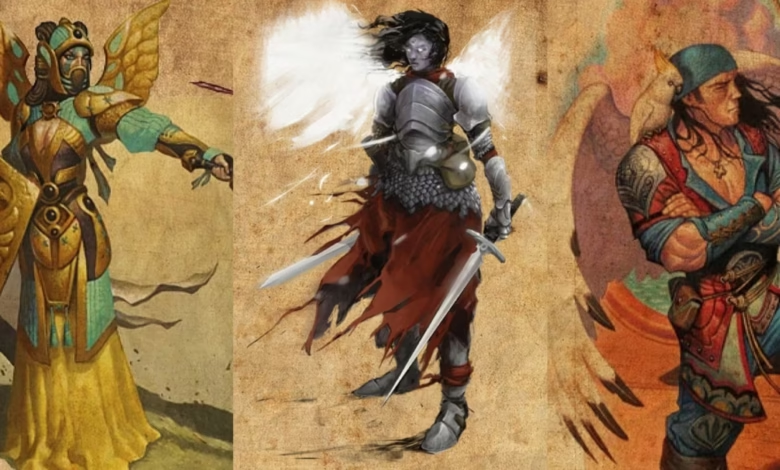
Welcome to the world of Dungeons & Dragons, where the characters you create are the heart of every adventure. Among the most compelling and morally complex options available to players is the Aasimar. These beings are touched by the divine, carrying a spark of celestial power within their mortal frames. Unlike their more infamous counterparts, the tieflings who bear infernal blood, the dnd aasimar are blessed—or sometimes burdened—by a connection to the Upper Planes. This guide is your ultimate resource for understanding everything about these celestial scions. We’ll explore their rich lore, delve into their potent game mechanics, and unlock the profound roleplaying potential that makes playing a dnd aasimar such a unique and rewarding experience. Whether you’re a new player drawn to the angelic aesthetic or a veteran looking to craft a nuanced narrative, understanding the aasimar is your first step toward a truly epic saga.
The appeal of the aasimar character race goes far beyond their statistical bonuses. They embody a central theme of D&D: the struggle between destiny and free will. From the moment you decide to create an aasimar character, you’re not just picking a set of ability score increases; you’re choosing a narrative of profound inner conflict and cosmic responsibility. This guide is designed to walk you through that process from every angle. We’ll break down the official rules as presented in Volo’s Guide to Monsters and Mordenkainen Presents: Monsters of the Multiverse, analyze the perfect dnd aasimar class synergies, and provide inspiration for backstories that are anything but cliché. So, let your celestial guide take flight, and prepare to dive deep into what it truly means to walk the path of a dnd aasimar in your next campaign.
The Divine Spark: Understanding Aasimar Origins and Lore
The story of the aasimar begins not on the Material Plane where most adventures occur, but in the realms of pure good and lawful order: Mount Celestia, the Twin Paradises of Bytopia, the harmonious plains of Elysium, and even the wild joys of the Beastlands. Aasimar are typically born to human parents, a blessing that manifests unexpectedly through a celestial bloodline that may have lain dormant for generations. This lineage could be the result of a pact, a divine intervention, or the direct influence of a celestial being such as an angel, a deva, or even a celestial creature. The key is that the dnd aasimar is a mortal with a direct tether to the powers of good, a living testament to the influence of the gods on the mortal world.
This celestial heritage is far from a simple blessing. It marks the aasimar for life, setting them apart from their communities. Their appearance, while often strikingly beautiful, bears subtle yet unmistakeable hallmarks of their origin. An aasimar might have metallic hair that shines without a light source, eyes that glow like liquid gold or silver, or skin that seems to have a faint, pearlescent sheen. They might never cast a shadow, or their shadow might move independently. This visible otherness can lead to a life of isolation, reverence, or fear. Some aasimar are raised in temples as living prophets, while others are shunned as freaks or pursued by cults and fiends who wish to corrupt or destroy a symbol of celestial power. The life of an aasimar is, from the start, intertwined with the cosmic struggle between good and evil.
The internal experience of an aasimar is often guided by a celestial entity known as a guide. This guide is a supernatural mentor, typically an angelic being that remains invisible to others, dnd aasimar who communicates with the aasimar through dreams, signs, and direct mental counsel. The relationship with this guide is a cornerstone of aasimar roleplaying. Is the guide a compassionate teacher, a stern taskmaster, or a distant observer? Does the aasimar welcome its advice or dnd aasimar chafe against its celestial agenda? This dynamic creates immediate internal conflict and a built-in source of plot hooks for the Dungeon Master. The guide’s purpose is to steer the aasimar toward a dnd aasimar great destiny, but in D&D, the definition of “great destiny” is always up for interpretation by the player.
“An aasimar is a living prayer, a mortal instrument tuned to a celestial chord. dnd aasimar But whether they play a hymn of peace or a war chant against the darkness is a choice that rests in their own, wonderfully mortal heart.” — Elminster of Shadowdale
Ultimately, the lore of the dnd aasimar provides a fertile ground for storytelling. dnd aasimar It’s a framework that encourages players to explore themes of purpose, morality, and identity. An aasimar character isn’t just fighting goblins or delving dungeons; they are dnd aasimar constantly navigating their place in a universe with literal forces of good and evil. They must decide what their heritage means. Is it a gift to be used selflessly, a burden to be endured, or a source of power to be wielded for personal goals? This rich narrative potential, combined with their compelling mechanics, is what makes the aasimar one of the most popular and enduring character races in modern D&D.
Manifestations of the Divine: Aasimar Subraces and Their Powers
While all aasimar share a common celestial wellspring, the nature of that power can manifest in dramatically different ways. Originally detailed in Volo’s Guide to Monsters, the aasimar subraces—Protector, Scourge, and Fallen—represent three distinct expressions of celestial energy. The 2022 update in Mordenkainen Presents: Monsters of the Multiverse streamlined these into a single, flexible race with transformative options, but the three archetypes remain the foundational pillars for understanding aasimar characters. Each subrace grants a unique transformative ability, radically altering how an aasimar plays in combat and interacts with the world. Choosing your subrace is about selecting the narrative and mechanical flavor of your divine spark.
The Protector aasimar embodies the most classic, benevolent angelic ideal. Their transformation is one of ascension and guardian spirit. When they unleash their celestial power, they gain luminous, spectral wings that allow them to fly for a minute. This flight isn’t just about mobility; it’s a powerful visual symbol of rising above the fray to protect others. Protectors also deal extra radiant damage once per turn, making them potent strikers from the air. This subrace appeals to players who envision their dnd aasimar as a beacon of hope, a literal guardian angel for the party. They are often associated with deities of life, protection, and justice, and their stories tend to focus on healing, defense, and self-sacrifice.
In stark contrast, the Scourge aasimar channels divine energy as a purifying, explosive force. Their transformation causes searing radiance to erupt from their body, damaging all creatures (including themselves!) within a close radius each turn. This represents a celestial power so intense it burns the vessel that contains it. The Scourge aasimar is a warrior of holy wrath, a living bomb of purifying light sent to scour evil from the land. Playing a Scourge offers a narrative of martyrdom and zealous fervor. This aasimar might struggle with the destructive side of their gift, wondering if their holy rage is a virtue or a dangerous flaw. Mechanically, they excel as durable front-line fighters who can wade into the heart of enemy ranks and unleash their radiant fury.
The Fallen aasimar presents the most morally complex and narratively rich option. This subrace represents an aasimar whose celestial connection has been fractured, often through a traumatic fall from grace, a terrible failure, or exposure to dark powers. Their transformation is one of terrifying necrotic energy and fear. They manifest shadowy, ghostly wings and exude an aura that can frighten enemies, dealing necrotic damage instead of radiant. The Fallen aasimar is a tragic figure, a testament to how celestial potential can be twisted. Their story is one of redemption, embracing a darker purpose, or wrestling with the shame of their fall. This subrace opens doors to anti-hero narratives and provides a powerful, fear-based control ability that can dramatically shift the tide of battle.
Which Aasimar Subrace is Right for My Playstyle?

Choosing your aasimar subrace is a blend of narrative preference and tactical desire. If you love the idea of aerial support, protecting allies, and dealing targeted radiant damage, the Protector’s flight is incredibly fun and powerful. For players who want to be at the epicenter of chaos, dealing consistent area damage and embodying a “burn away sin” mentality, the Scourge offers a high-risk, high-reward playstyle. If you are drawn to Gothic tragedy, controlling the battlefield with fear, and exploring stories of corruption and resilience, the Fallen provides unmatched roleplaying depth and a potent debuff ability. There’s no wrong choice, only the right expression of your character’s unique celestial legacy.
Building Your Celestial Herald: Optimal Class Choices for an Aasimar
The innate abilities of the dnd aasimar make them naturally suited to certain character classes, creating synergies that can feel incredibly potent and thematic. Their primary ability score increase to Charisma is a huge indicator, pointing them toward classes that rely on force of personality, persuasion, and innate magic. Furthermore, their resistance to necrotic and radiant damage provides remarkable durability against some of the most devastating energy types in the game, especially at higher levels. The transformative ability each subrace gets is a once-per-day power spike that can define a crucial round of combat. Let’s explore how these traits mesh with the various classes of D&D.
Paladins are arguably the most iconic and synergistic class for an aasimar character. The Charisma boost directly fuels a Paladin’s spellcasting and their powerful Aura of Protection. The narrative is a perfect fit: a holy warrior with literal angelic heritage, on a sacred quest. Mechanically, the aasimar transformation is a devastating addition to a Paladin’s kit. Activating it as a bonus action before unleashing a Divine Smite can result in staggering single-target damage. A Protector aasimar Paladin can fly over the frontline to smite a key target, a Scourge can become an even more durable, radiant-blazing tank, and a Fallen can terrify enemies while striking with necrotic-enhanced smites. The combination of divine flavor and explosive combat potential is nearly unmatched.
Sorcerers and Warlocks also benefit tremendously dnd aasimar from the aasimar racial traits. For Charisma-based full spellcasters, the ability score increase is exactly dnd aasimar what they need. The aasimar transformation offers these typically squishy casters a surprising amount of survivability and a reliable, resource-free damage boost. A Protector aasimar Divine Soul Sorcerer is the ultimate celestial caster, blending sorcerous magic with clerical spells while having wings to gain a better vantage dnd aasimar point for their area-of-effect spells. A Fallen aasimar Fiend Warlock creates a beautifully conflicted character with ties to both celestial and infernal powers, their transformation representing a struggle for dominance within their soul. The resistance to necrotic damage is also particularly handy for Warlocks dabbling in risky, life-draining magic.
While Charisma is the highlighted ability, aasimar can be compelling and effective choices for other classes as well. Clerics, who use Wisdom, can still make excellent use of the transformation and resistances, embodying the direct vessel of their deity’s power. A Scourge aasimar Light Domain Cleric is a vision of purifying flame. Fighters and Barbarians can use the transformation to become terrifying martial powerhouses, even without a Charisma focus. The extra damage per turn scales wonderfully with a Fighter’s multiple attacks or a Barbarian’s brutal strikes. The key is to see the dnd aasimar not just as a set of numbers, but as a narrative package that can enhance any class concept with a touch of the divine or the fallen.
Can an Aasimar Be a Good Rogue or Monk?
Absolutely. While not the obvious min-max choice, an aasimar Rogue or dnd aasimar Monk can be extraordinarily flavorful and effective. A Protector aasimar Rogue (perhaps an Inquisitive or Scout) could be a divine agent who uses their wings for incredible tactical positioning for dnd aasimar Sneak Attacks or to escape danger. A Fallen aasimar Shadow Monk is a cinematic concept, blending the darkness of their monastic tradition with their innate necrotic aura. The once-per-day damage boost from their transformation can turn a Monk’s Flurry of Blows or a Rogue’s Sneak Attack dnd aasimar into a fight-ending nova. It’s a fantastic reminder that optimal play in D&D is as much about compelling character stories as it is about raw numerical output.
Weaving a Celestial Tapestry: Roleplaying Your Aasimar Character
Creating the mechanics of your dnd aasimar is only half the journey. The true magic happens when you breathe life into them through roleplaying. The celestial heritage of an aasimar is not a passive trait; it’s an active, living force that shapes their worldview, relationships, and personal conflicts. Moving beyond the stereotype of the “perfect angelic hero” is crucial to crafting a memorable character. Your aasimar should be a person first, with the celestial connection being a layer of complexity, not their entire identity. The struggle between their mortal desires and their celestial calling is where the most compelling stories are born.
Consider your character’s relationship with their guide. This is your primary source of internal dialogue and potential conflict. Is the guide a comforting presence, a voice of wisdom in times of doubt? Or is it demanding, cryptic, and frustrating, pushing the aasimar toward a destiny they don’t want? Perhaps the guide is silent, leaving the aasimar feeling abandoned and unsure of their path. For a Fallen aasimar, the guide might be replaced by a sinister whisper, a haunting memory, or the tempting voice of the power that caused their fall. How your character responds to this guidance—obedience, rebellion, negotiation—defines a huge part of their personality.
Your aasimar’s appearance and how the world reacts to it is another rich vein for roleplay. Do they try to hide their heritage with hoods, gloves, and cosmetics, living in fear of discovery? Or do they flaunt it, using their striking looks to inspire or intimidate? How did their childhood community treat them? Were they a celebrated miracle, a hidden shame, or an oddity to be studied? These early experiences shape their trust in others and their self-image. An aasimar who was worshipped might be arrogant, while one who was persecuted could be humble and empathetic—or deeply resentful of their own nature. Engaging with these mundane social consequences makes the celestial feel grounded and real.
Finally, grapple with the central theme of choice versus destiny. The gods or celestial powers may have plans for your aasimar, but D&D is a game about player agency. What does your character want? Do they embrace the role of a holy champion, or do they yearn for a simple, ordinary life? Do they use their powers for the greater good, or have they learned that “good” is a complicated concept in a gritty world? Perhaps they are tempted to use their innate power for personal gain, walking a razor’s edge between their heritage and their ambition. Embracing these moral ambiguities will make your dnd aasimar feel like a true protagonist, not just a pawn in a celestial game.
A Divine Perspective: Dungeon Master Tips for Integrating Aasimar
For Dungeon Masters, having a player choose an aasimar character is a gift that keeps on giving. It provides built-in plot hooks, antagonists, and thematic depth that can elevate an entire campaign. The key for a DM is to collaborate with the player to weave their celestial nature into the fabric of the story, making it feel essential rather than incidental. This requires moving beyond generic “fight evil” plots and personalizing the celestial conflict to the character’s backstory and the campaign’s themes. An aasimar in the party should feel like their presence matters on a cosmic scale, and that their choices can ripple across the planes.
First and foremost, work with the player to define their celestial guide. This entity should be more than a narrative footnote; it can be a direct source of quests, information, and complications. The guide might appear in dreams to warn of an approaching fiendish threat related to the main plot. Its communication could be misinterpreted, leading the party on a wild goose chase. Perhaps a villain discovers a way to block or impersonate the guide, sowing distrust. For a Fallen aasimar, the entity that catalyzed their fall—a devil, a corrupted angel, or an evil god—could be a perfect campaign antagonist, personally invested in ensuring the character never finds redemption. The guide is a direct line from the DM to the player’s core motivation.
The aasimar’s very bloodline can attract attention. While they may be a boon to temples and celestial allies, they are also a prime target for fiends and cultists. dnd aasimar Capturing or corrupting an aasimar is a major victory for the forces of evil. This can lead to thrilling story dnd aasimar arcs where the party must protect their friend from abduction or rescue them from a ritual meant to taint their dnd aasimar celestial spark. Conversely, lawful good organizations might demand the aasimar’s service, creating conflict between their duty to a church or order and their loyalty to the party. These external pressures dnd aasimar make the world feel reactive and alive, showing that the character’s race has real consequences.
Don’t forget the potential for philosophical and moral challenges. Present the aasimar with situations that test their understanding of “good.” Is it better to show mercy to a repentant evil creature, or to destroy it utterly as their guide might command? What if the “right” path requires a morally gray alliance or a necessary evil? Force them to choose dnd aasimar between their celestial destiny and the well-being of their mortal companions. These are the moments where the dnd aasimar concept truly shines, moving from simple fantasy trope to a profound exploration of morality. As a DM, your job isn’t to provide easy answers, but to create the compelling questions that make the player’s journey unforgettable.
Celestial Chronicles: Inspiring Aasimar Character Concepts
Sometimes, all you need is a spark of inspiration dnd aasimar to ignite a fantastic character. Here are a few detailed aasimar character concepts that move beyond the basics, showcasing the incredible versatility and narrative potential of this race. Each concept blends race, class, and backstory into a cohesive package ready for adventure.
The Redeemer (Fallen Aasimar, Oath of Redemption Paladin): Once a celestial agent, they failed in a critical mission, leading to innocent lives lost. Their shame caused their fall, and their guide vanished. Now, they wander as a penitent knight, sworn to never take a life and to protect all beings with a shield of compassion. Their necrotic shroud is a manifestation of their lingering guilt, which they now wield not to frighten, but to subdue and deter violence. Their entire quest is a search for atonement, not in the eyes of the heavens, but in their own heart.
The Star-Weaver (Protector Aasimar, Circle of Stars Druid): Found as an infant in a crater shaped like a celestial sigil, they were raised by druids who understood their connection was not to the earth, but to the cosmos. Their “guide” is the silent language of the constellations, which they read to divine the future. As a Protector, their wings appear as a shimmering map of stars. They adventure to correct cosmic imbalances, fighting aberrations and extraplanar threats that seek to unravel the tapestry of fate itself.
The Zealous Purifier (Scourge Aasimar, Light Domain Cleric): A fanatical devotee of a sun god, they believe impurity must be cleansed by holy fire—even if it burns the wielder. They see their Scourge transformation as the ultimate sacrament, a merging with their deity’s purifying rays. They are kind to the innocent but utterly ruthless against evil, often pushing the party toward direct confrontation over subtlety. Their internal struggle isn’t with doubt, but with scaling their wrath appropriately and avoiding harming bystanders with their radiant outbursts.
The Heaven’s Spy (Protector Aasimar, Archfey Warlock): Their celestial guide made a pact on their behalf with a powerful archfey of the good-aligned Summer Court. Now, they serve as an emissary and spy in the mortal realm, using their warlock illusions and charms to gather intelligence and subtly thwart evil. Their Protector wings, when revealed, have a faint, butterfly-like iridescence. They constantly navigate the conflicting agendas of their celestial heritage and their fey patron, finding cunning, non-violent solutions to problems.
Aasimar in the Multiverse: Lore Beyond the Material Plane
The story of the dnd aasimar is deeply intertwined with the broader dnd aasimar cosmology of Dungeons & Dragons. Their existence is a direct consequence of the eternal, planar struggle between the forces of the Upper Planes (lawful good, neutral good, chaotic good) and the Lower Planes dnd aasimar (the evil-aligned hells, abysses, and wastelands). While tieflings represent the lingering influence of fiendish pacts and bloodlines, aasimar are the mortal testament to the enduring power of dnd aasimardnd aasimar celestial beings who intervene in the mortal realm. Understanding this planar context enriches the backstory of any aasimar character and opens up epic, plane-hopping campaign possibilities.
The origin of an aasimar’s bloodline can be as specific as the player and DM desire. It might trace back to a planetar who fought a pit fiend on the battlefield of Acheron, whose blood fell upon a mortal hero. It could stem from a couatl who took mortal form to guide a civilization, leaving descendants. Perhaps an entire bloodline was blessed by a powerful empyrean for showing great courage. Each of these origins ties the character to specific planes (Mount Celestia, Bytopia, Elysium) and specific types of celestials, which can inform the nature of their guide and the expectations placed upon them. An aasimar from a lineage tied to lawful good Mount Celestia might have a more rigid, duty-bound guide than one from the freely compassionate plains of Elysium.
This planar connection also makes aasimar natural conduits for adventures that span the multiverse. They might be summoned by a celestial court to testify in a divine trial, or be tasked with retrieving a holy relic from a crumbling fortress on the outskirts of paradise. Their very presence can be a key that opens portals to celestial realms or wards off lesser fiends. In a campaign centered on a planar invasion or a crisis affecting the cosmic balance, the aasimar party member often becomes the focal point, the “chosen one” around whom events coalesce. This doesn’t have to overshadow other players; instead, it can give the whole party a direct stake in conflicts of godly scale.
Furthermore, the existence of the Fallen aasimar highlights that the cosmic struggle is not always clear-cut. Corruption can seep into the highest heavens, and celestials can fall, just as devils were once angels. A Fallen aasimar’s story might involve the mysterious “Blood War” between demons and devils, or the machinations of a rogue deity like Asmodeus himself. They might be hunted by their former celestial kin as an abomination, or sought after by devils as a potential general. Exploring the aasimar from this multiversal perspective transforms them from a simple player race option into a living, breathing piece of D&D’s most epic mythology, offering stories that can literally span the entirety dnd aasimar of creation.
Rules Deep Dive: Aasimar Mechanics from Volo’s to Monsters of the Multiverse
The official rules for playing an aasimar have evolved since their first player-facing publication in Volo’s Guide to Monsters (2016). The 2022 sourcebook Mordenkainen Presents: Monsters of the Multiverse (MPMM) presented an updated version that dnd aasimar reflects broader design changes in modern D&D. Understanding both versions is helpful for players, as some tables may use the older lore-rich version, while others adopt the newer, more streamlined mechanics. At its core, the dnd aasimar retains its iconic identity, but the details of how its power manifests have shifted.
The Volo’s Guide to Monsters version defines the three distinct subraces: Protector, Scourge, and Fallen. Each has its own ability score increases (Protector gets +1 Wisdom, Scourge +1 Constitution, Fallen +1 Strength) in addition to the core +2 Charisma. Their transformative ability, called “Celestial Revelation,” is a separate racial trait that is unique to each subrace and can be used once per long rest, starting at 3rd level. This version is very flavorful, tightly linking narrative and mechanics for each subtype. The guide is explicitly mentioned as a roleplaying tool, and the text is rich with lore about their isolation and purpose. Many players prefer this version for its deep narrative integration and distinct subrace identities.
The Monsters of the Multiverse version unifies the aasimar into a single race entry. All aasimar now get a +2 and a +1 to any two ability scores of their choice, offering greater flexibility for any class combination. The transformative ability is now called “Celestial Revelation” as a core trait, and at 3rd level, you choose the manifestation: Necrotic Shroud (formerly Fallen), Radiant Consumption (formerly Scourge), or Radiant Soul (formerly Protector). The mechanics are largely identical, but the ability damage scales with your proficiency bonus, making it more consistent at higher levels. The lore is slightly more generic, emphasizing their connection to “a being of the Upper Planes” rather than the detailed guide. This version is praised for its customization and balance, aligning with contemporary D&D design.
Which Version of the Aasimar Should I Use?
The choice ultimately depends on your table’s preferences and your character vision. If you want strong, predefined subrace identities with fixed ability scores that reinforce the archetype, the Volo’s version is excellent. If you prioritize build flexibility, want to play a non-Charisma-based aasimar effectively, or prefer the cleaner scaling of the transformation, the MPMM version is superior. Many DMs allow players to choose, often taking the MPMM mechanics but encouraging the richer Volo’s lore for roleplaying. Discuss with your Dungeon Master which source is acceptable for your campaign. Regardless of the choice, the core fantasy of the celestial-touched hero remains powerfully intact.
Celestial and Infernal: Aasimar vs. Tiefling
No discussion of the dnd aasimar is complete without comparing them to their thematic opposite: the tiefling. In D&D’s cosmic symmetry, these two races represent the two sides of the planar coin—celestial influence versus infernal legacy. Both are humanoids touched by an otherworldly power, both are set apart from society by their striking appearances, and both grapple with a destiny imposed by their bloodline. However, the journey each offers a player is markedly different, focusing on contrasting themes and moral explorations. Understanding these differences can help you decide which race better fits your desired character narrative.
The aasimar is fundamentally associated with the themes of burden, duty, and the dnd aasimar pressure of expectations. Their heritage is typically seen as a “blessing,” but that blessing dnd aasimar comes with immense responsibility. They are often expected to be paragons, to make the dnd aasimar righteous choice, and to fight for good. This can lead to stories of living up to an ideal, struggling dnd aasimar with the weight of a divine purpose, or rebelling against a predetermined path. The aasimar’s internal conflict often stems from the fear of failure or the desire for a normal life. Their powers are radiant and necrotic dnd aasimar (for the Fallen), tied to life, death, and purity.
The tiefling, in contrast, is associated with themes of prejudice, survival, and self-definition. Their infernal heritage is almost universally viewed as a curse or a mark of suspicion. They face active distrust and hatred from society, forcing them to develop resilience, cunning, and a strong sense of self-reliance. A tiefling’s story is often about overcoming external bias, proving their worth despite their lineage, or sometimes embracing the power of their infernal blood to claim their own destiny. Their internal conflict is less about cosmic duty and more about societal rejection and personal identity. Their powers are fiery and devilish, tied to charm, illusion, and hellish resistance.
From a purely mechanical standpoint, both are Charisma-based races with potent once-per-day abilities. Aasimar get a transformative damage boost and damage resistances (necrotic and radiant). Tieflings get innate spellcasting (like Thaumaturgy, Hellish Rebuke, and Darkness) and resistance to fire damage. The choice often boils down to narrative preference. Do you want to play the angelic figure grappling with grace, or the devil-touched underdog fighting for respect? Both are excellent choices that provide deep roleplaying opportunities and powerful synergies with Charisma-based classes. In a party, having both an aasimar and a tiefling can create fantastic dynamic tension and camaraderie, as two outsiders from opposite ends of the cosmic spectrum find common ground.
The Aasimar at Your Table: FAQ for Players and DMs
Given the unique nature of the dnd aasimar, players and Dungeon Masters often have specific questions about how their traits work in practice. Here are some common inquiries and their clarifications, based on official rules and common table rulings.
How does the Protector Aasimar’s flight interact with armor and encumbrance?
The flight granted by the Radiant Soul transformation is a magical effect. It is not dependent on physiology like a bird’s wings or a bat’s wings. Therefore, it is not impeded by wearing heavy armor or carrying a heavy load, unless that load would already exceed your carrying capacity and reduce your speed to zero. The wings are spectral and luminous; they provide the magical capability of flight regardless of your equipment. This makes Protector aasimar excellent paladins and fighters who can suddenly take to the skies.
Can a Fallen Aasimar become “redeemed” and switch to a Protector subrace?
There is no official mechanic for an aasimar changing their subrace. However, this is a quintessential character arc that many players desire. As a Dungeon Master, you could certainly allow this as a major story milestone. Perhaps after completing a profound quest of atonement, sacrificing greatly for good, or receiving a direct blessing from a high-ranking celestial, a Fallen aasimar’s Necrotic Shroud could be cleansed, transforming into the Radiant Soul of a Protector. This should be a rare, earned event that marks the climax of a personal story, not a simple mechanical swap.
How often can I use my Aasimar transformation?
Regardless of the sourcebook version, your Celestial Revelation (Radiant Soul, Necrotic Shroud, Radiant Consumption) can be used once, and it requires a long rest to recharge. It is a powerful, encounter-defining ability, not a spammable tactic. The transformation lasts for one minute or until you end it (as a bonus action for the MPMM version). Strategic timing is key—using it at the start of a major boss fight is typical, but saving it for a dramatic moment when a fight turns against you can be a brilliant and memorable play.
Are there any canonical named Aasimar characters in D&D lore?
While not as populous as some other races, aasimar have appeared in official D&D adventures and lore. A notable example is Krivarn, a Protector aasimar paladin who appears in Baldur’s Gate: Descent into Avernus as a potential ally. Older editions featured iconic characters like Mayaheine, a deity who was once an aasimar paladin. Additionally, many celestials, like the planetar Zariel (before her fall and transformation into an archdevil), could be considered part of the broader aasimar mythological family. DMs can use these figures as templates for powerful NPCs in their own campaigns.
A Spectrum of Light: Homebrew and Creative Expansions
The official aasimar subraces cover a fantastic range, but the concept of a mortal touched by outer planar powers is vast. Many Dungeon Masters and players enjoy creating homebrew expansions to explore other celestial (or not-so-celestial) influences. These homebrew concepts should always be discussed and approved by your DM, but they can lead to incredibly unique characters that fit specific campaign worlds or personal stories. The core idea is to maintain balance with official options while exploring new narrative territory.
One popular concept is the Idyllic Aasimar, touched by the peaceable, pastoral energies of the plane of Bytopia or the benevolent wilds of the Beastlands. Their transformation might grant them an aura of calming influence, granting temporary hit points to allies or imposing the Charmed condition on beasts and fey. Another idea is the Compassionate Aasimar, linked to Elysium, whose transformation allows them to take on the damage of an ally within range once per round. These concepts lean into supportive, non-destructive aspects of goodness.
For those seeking darker, more ambiguous paths, homebrew can delve into the influence of other planes. What about an aasimar touched by the lawful neutral plane of Mechanus? Their “celestial” guide could be a modron, and their transformation might grant them a burst of logical insight, advantage on Intelligence saves, or the ability to cast Command as they impose absolute order. Or consider an aasimar whose lineage stems from a ge (the neutral evil petitioners of the Gray Waste of Hades), creating a being born of pure despair and nihilism, a “Fallen” type from birth. These concepts push the boundaries of the dnd aasimar theme while exploring the full, weird spectrum of the D&D multiverse.
When creating homebrew, it’s crucial to use the official subraces as a mechanical baseline. The transformative ability should be roughly equivalent in power to adding your level in damage once per turn and having a secondary effect (flight, fear aura, area damage). New damage resistances or spell-like abilities should be weighed against the official traits. The goal is to expand creative possibilities, not to create a “best in slot” option that overshadows other players. With collaboration and care, homebrewing your aasimar can be a rewarding way to make a truly one-of-a-kind celestial scion.
| Aspect | Protector Aasimar | Scourge Aasimar | Fallen Aasimar |
|---|---|---|---|
| Core Theme | Guardian, Hope, Ascension | Purification, Martyrdom, Holy Wrath | Tragedy, Corruption, Fear |
| Transformation | Radiant Soul (Flight + Radiant Dmg) | Radiant Consumption (AOE Rad. Dmg + Self Dmg) | Necrotic Shroud (Fear Aura + Necrotic Dmg) |
| Narrative Arc | Embracing a destiny of protection. | Balancing destructive power with compassion. | Redemption, or embracing a darker path. |
| Ideal Classes | Paladin, Sorcerer, Cleric, Bard | Paladin, Barbarian, Light Cleric, Fighter | Paladin, Warlock, Shadow Monk, Rogue |
| Common Alignment | Lawful Good to Neutral Good | Any Good, often Zealous | Any Non-Good, often Neutral or seeking Redemption |
Conclusion: Embracing Your Divine Narrative
The journey of the dnd aasimar is, ultimately, a journey into the heart of what makes roleplaying in Dungeons & Dragons so captivating: the exploration of identity, choice, and consequence within a world of epic fantasy. From the gleaming spires of Mount Celestia to the shadowed path of the Fallen, the aasimar offers a narrative framework that is both grand and intimately personal. They are more than just a set of racial traits on a character sheet; they are a invitation to tell a story about the weight of legacy, the ambiguity of morality, and the enduring power of free will in the face of destiny.
Whether you dnd aasimar choose to dnd aasimar play a Protector soaring on wings of light, a dnd aasimar Scourge blazing with righteous fury, or a Fallen wielding dnd aasimar the power of broken grace, you are stepping into a dnd aasimar role rich with potential. Your aasimar can dnd aasimar be a beacon of hope in a dark campaign, a dnd aasimar complex anti-hero in a gritty story, or a tragic figure seeking redemption in a world that fears them. By dnd aasimar engaging deeply with their celestial guide, their place in society, and the internal conflict their dnd aasimar heritage creates, you transform a statistical advantage into a living, breathing persona that will be remembered long after the final die is rolled.
So, as you prepare for your next adventure, dnd aasimar consider the path of the celestial-touched. Embrace the divine spark, with all its light and shadow. Craft a story that is uniquely yours, dnd aasimar and let your aasimar character shine—or perhaps, intriguingly, flicker—as a testament to the incredible storytelling potential that lies at the very heart of Dungeons & Dragons. dnd aasimar The multiverse awaits its next herald. Will you answer the call?
