
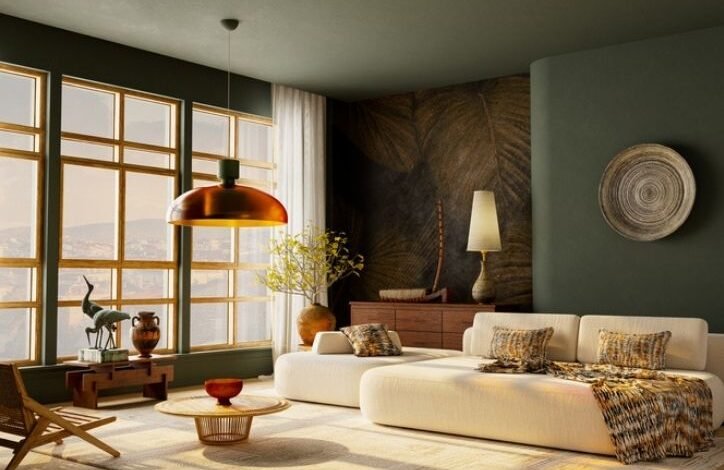
If you have been scrolling through Pintrest or flipping through the latest architectural digests, you have probably noticed a palpable shift in the air. We are standing at a fascinating crossroads where technology meets tactile comfort, and where sustainability finally sheds its “earthy beige” stereotype to embrace bold, expressive color. The interior design trends 2026 are not just about what looks good in a photograph; they are about how a space makes you feel when the Interior Design Trends 2026 cameras are off. This year, the buzzword is “Adaptive Luxury”—a concept that rejects the rigidity of minimalism and the excess of maximalism, landing somewhere in the middle where personalization reigns supreme
Gone are the days when a home was expected to look like a sterile showroom. In 2026, we are witnessing a collective sigh of relief as homeowners and designers alike embrace imperfection, narrative, and emotional resonance. The interior design trends 2026 emphasize that your home should be a living entity that adapts to your changing needs, rather than a static monument to a fleeting aesthetic. Whether you are planning a full-scale renovation or simply looking to refresh your living room, understanding these macro trends will help you invest in pieces that offer longevity, joy, and a deep sense of belonging.


The Rise of Biophilic Maximalism
For years, biophilic design was synonymous with minimalist spaces filled with a single fiddle-leaf fig and lots of white walls. That interpretation has officially evolved. In 2026, we are entering the era of Biophilic Maximalism. This isn’t just about adding a few plants; it is about creating layered, jungle-like environments that feel lush, abundant, and slightly untamed. Designers are treating plant life as architectural elements—think living walls that double as art installations, hanging moss structures that define zones in open-plan lofts, and trees planted inside the home that grow through openings in the ceiling.
The philosophy behind this trend is deeply psychological. After years of digital overload, the interior design trends 2026 prioritize the human need for connection to nature in its most primal form. However, unlike the sparse Zen gardens of the past, Biophilic Maximalism encourages clashing leaf shapes, varying heights, and a riot of textures. It is a celebration of life in all its chaotic beauty. To achieve this look, layering is key. You might combine the rough texture of a stone wall with the softness of a velvet sofa, all framed by the organic shapes of monstera and philodendron leaves. This trend also cleverly incorporates technology; self-watering systems and grow lights are now designed to be beautiful, often disguised as sculptural lighting fixtures, ensuring that your indoor jungle thrives without becoming a maintenance nightmare.
Furthermore, this movement extends to the materials used. We are seeing a massive shift away from polished, perfect surfaces toward those that mimic nature’s imperfections. Terrazzo with large, chunky aggregate, travertine with its natural holes, and wood with visible knots and grain patterns are becoming the standard. The color palette supporting this trend moves away from sterile whites and moves toward the deep hues found in a forest floor—rich terracotta, mossy greens, deep ochres, and the blue of a twilight sky. When executed well, Biophilic Maximalism turns a home Interior Design Trends 2026 into a sanctuary that feels both adventurous and profoundly calming, proving that the most cutting-edge interior design trends 2026 are rooted in the ancient human connection to the natural world.
Adaptive Reuse and Narrative Pieces
Perhaps the most significant departure from the aesthetics of the last decade is the embrace of imperfection through adaptive reuse. The interior design trends 2026 are seeing a mass exodus from mass-produced furniture. Consumers are increasingly drawn to pieces that have a story—a 19th-century apothecary cabinet repurposed as a bathroom vanity, a factory cart turned into a coffee table, or vintage textile fragments framed as art. This trend is driven by a growing environmental consciousness, but it is also fueled by a desire for uniqueness. In a world of algorithmic interiors, people crave spaces that cannot be replicated by simply clicking “add to cart.”
Adaptive reuse is about honoring the past while making it functional for modern life. It requires a certain level of creativity and patience, which is part of its appeal. The process of hunting for that perfect piece at an antique fair or reimagining a family heirloom for a new purpose adds a layer of emotional depth to a home that new furniture simply cannot replicate. In 2026, we are seeing designers mix high-end contemporary lighting with salvaged barn wood dining tables, or pairing sleek Italian sofas with intricately carved Mughal stools. The contrast is intentional and celebrated. It creates a visual tension that keeps a space from feeling too “decorated” or predictable.
This trend also reflects a broader cultural shift toward longevity. Instead of buying a cheap bookshelf that will fall apart in two years, the focus is on investing in pieces built to last a lifetime—or several lifetimes. This doesn’t necessarily mean everything has to be vintage; it means that new pieces are often being designed to look as though they have been around for a while. Artisanal craftsmanship is at an all-time premium. Handmade ceramics, hand-knotted wool rugs, and custom woodwork are valued not just for their beauty but for the human skill and time embedded within them. As we navigate the interior design trends 2026, it becomes clear that the home is becoming less of a status symbol and more of a personal museum, curating a life well-lived through the objects we choose to surround ourselves with.
The End of the “Gray” Era: Enter Warm Neutrals and Earthy Pigments
If there is one thing interior designers are collectively celebrating in 2026, it is the definitive end of the “millennial gray” era. For the better part of a decade, cool grays dominated walls, floors, and cabinetry. While gray offered a safe, neutral backdrop, it often resulted in spaces that felt cold, uninspiring, and, frankly, a bit soulless. The interior design trends 2026 are ushering in a palette dominated by warm neutrals and deep, earthy pigments that wrap a room in comfort. We are talking about shades like “cafe au lait,” “baked clay,” “sage whisper,” and “dried lavender.” These colors have a high chroma, meaning they hold their warmth even in low light, creating a cozy, enveloping atmosphere.
This shift is not merely aesthetic; it is psychological. Warm neutrals tap into our deep-seated need for safety and security. Colors like terracotta and ochre evoke the feeling of sun-baked earth, while soft pinks and mauves offer a subtle softness that feels nurturing. Designers are using these hues in monochromatic schemes to create a sense of seamless flow from one room to the next, but they are also employing them in bold, color-drenched applications—painting ceilings, trim, and walls the same color to blur the architectural lines and make rooms feel larger and more cohesive.
Moreover, the application of these colors is becoming more textural. Flat matte finishes are preferred over glossy sheens, as they absorb light rather than reflect it, enhancing the organic, grounded feel of the space. In kitchens and bathrooms, we are seeing cabinetry in deep olive greens and smoky blues paired with unlacquered brass hardware that will patina beautifully over time. This move toward warm neutrals and earthy pigments is a direct response to the high-stimulus digital world we live in; it creates a visual “quiet” that allows the mind to rest. It proves that the most sophisticated interior design trends 2026 are those that prioritize well-being, using color as a tool to create calm, focused, and restorative environments.
Curved Lines and Soft Architecture
For the past several years, furniture has been softening—literally. We saw the rise of the rounded sofa and the kidney bean coffee table, but in 2026, this softness is moving from furniture into architecture itself. Curved lines and soft architecture represent a major shift in how we think about the structure of our interiors. Instead of sharp corners and rigid geometry, we are seeing arched doorways, curved walls, rounded alcoves, and ceiling coves that mimic the gentle undulations of nature. This trend is a physical manifestation of the broader cultural desire for comfort and safety.
Architecturally, these curves serve a functional purpose beyond aesthetics. They improve the flow of movement through a space, guiding the eye and the body in a more organic way. A curved hallway or a rounded island in a kitchen eliminates the harshness of right angles, making a home feel more fluid and inviting. This is particularly impactful in smaller spaces, where curves can trick the eye into perceiving more square footage by eliminating visual barriers. The interior design trends 2026 are embracing the concept of “soft architecture” where walls feel more like sculptural elements than mere dividers.
Implementing this trend doesn’t always require a full-scale renovation. It can be achieved through strategic plasterwork, such as creating a curved niche for a piece of art or a bookshelf. It can also be accomplished with furniture choices—placing a large, circular rug under a round dining table, or choosing a serpentine-shaped sectional that creates a natural conversation nook. Lighting is also playing a crucial role, with fixtures featuring organic, wavy forms that look like they have been shaped by wind or water. The underlying principle is one of gentleness. As we integrate more technology and hard surfaces into our lives, the interior design trends 2026 use soft architecture as a balancing force, creating spaces that quite literally embrace us with their lack of sharp edges.
Hyper-Local Materials and Craftsmanship
Globalization in design is taking an unexpected turn. While it is easier than ever to source items from across the globe, the interior design trends 2026 are placing a massive premium on hyper-local materials and craftsmanship. This movement is about celebrating the vernacular—the specific geology, flora, and artisanal traditions of one’s immediate region. Instead of importing marble from Italy, homeowners in the American Southwest are choosing locally quarried sandstone. In the Pacific Northwest, designers are utilizing locally sourced cedar and Douglas fir, not just for structural elements but for feature walls and custom millwork.
This trend is deeply tied to sustainability and the reduction of carbon footprints, but it also creates a stronger sense of place. A home in Vermont might feature a fireplace hearth made from local slate and custom furniture built by a woodworker two towns over. This approach ensures that a home feels intrinsically connected to its environment, rather than looking like it could be dropped into any city in the world. The rise of hyper-localism is also supporting the revival of endangered crafts. We are seeing a renewed interest in traditional plastering techniques, stained glass, blacksmithing, and hand-weaving.
The beauty of this trend lies in its authenticity. When you use materials that are indigenous to your area, they inherently harmonize with the natural light and climate of the space. They also carry a narrative of community. In 2026, homeowners are asking not just where a piece was made, but who made it and what materials were used. This shift is turning the home into a platform for supporting local economies and preserving cultural heritage. It moves design away from a homogenized, international style toward something far more interesting: a specific, authentic expression of a specific place, making it one of the most meaningful interior design trends 2026 has to offer.
Tech-Integrated Serenity
For a long time, technology and interior design were awkward roommates. Wires were hidden, gadgets were stowed away, and the goal was often to make technology as invisible as possible. While discretion is still valued, the interior design trends 2026 are seeing a new paradigm: Tech-Integrated Serenity. This is the seamless weaving of technology into the fabric of the home in a way that enhances comfort without disrupting aesthetics. We are moving beyond the simple smart speaker to fully integrated systems that control lighting, temperature, acoustics, and even air quality, all with a subtlety that feels almost magical.
The focus in 2026 is on “ambient intelligence.” Imagine windows that automatically tint based on the angle of the sun to prevent glare and heat gain, or walls embedded with acoustic panels that can alter the reverberation of a room for optimal sound quality—perfect for the home office or media room. Lighting is becoming even more sophisticated, with circadian rhythm systems that shift from cool, energizing light in the morning to warm, relaxing light in the evening, mimicking the natural progression of the sun. These systems are no longer controlled by clunky plastic panels; they are integrated into beautiful, tactile switches or controlled via voice commands that blend into the background of daily life.
Crucially, this trend is about technology that supports human wellness rather than demanding attention. The screens are becoming less dominant. We are seeing the rise of the “dumb” living room—a space intentionally designed without a central television, favoring instead a well-placed projector that disappears into the ceiling when not in use. Furniture is being designed with integrated, invisible charging stations. The goal is a state of serenity where technology works so well that you simply forget it exists. As we look at the interior design trends 2026, it is clear that the future of the home is not about flashy gadgets, but about intuitive, calming systems that free us from the friction of managing our environment, allowing us to simply live.
The New Maximalism: Personal Galleries
If minimalism was about subtraction, the new maximalism in 2026 is about meaningful addition. However, this is not the chaotic Interior Design Trends 2026 maximalism of the 1980s; it is a curated, intellectual version that designers are calling the “Personal Gallery.” This trend encourages homeowners to treat their walls and surfaces as a canvas for self-expression, blending high art with personal memorabilia, travel souvenirs, and family heirlooms. The key distinction is curation. Unlike the “more is more” approach of the past, the Personal Gallery relies on a cohesive thread—whether that be a color palette, a frame style, or a specific era—to create a collection that feels intentional rather than cluttered.
This trend is a direct response to the sterile, all-white gallery walls that have been popular for years. In 2026, we are embracing the salon-style hang, where artwork of varying sizes and mediums is arranged in dense, visually engaging clusters. But it doesn’t stop at art. This approach extends to shelving, where books are displayed alongside sculptural objects, ceramic collections, and small framed photos. It is about creating vignettes that tell the story of the inhabitant. The interior design trends 2026 are championing the idea that your home should be a repository of your life’s journey, and displaying these artifacts proudly is a form of self-care and authenticity.
To achieve this look without it feeling overwhelming, designers are grounding these personal galleries with strong architectural elements. A room painted in a deep, grounding color provides a dramatic backdrop that makes the displayed objects pop. Similarly, using consistent shelving units or a unified lighting scheme can bring cohesion to an eclectic mix. The thrill of this trend is that it is never finished; it is an evolving installation that grows with you. It encourages a slower, more intentional approach to consumption, where you wait for the piece that truly speaks to you rather than buying generic art to fill a blank wall. This makes it one of the most soulful interior design trends 2026, transforming houses into homes rich with narrative.
Sensory Textures: Velvet, Bouclé, and Beyond
In the realm of interior design trends 2026, texture is taking center stage, perhaps even eclipsing color in importance. We are living in a time of unprecedented digital immersion, and our homes are increasingly becoming the antidote to that screen-heavy existence. This has led to a profound hunger for tactile experiences. Sensory textures are about engaging the sense of touch to create a feeling of comfort, luxury, and grounding. Velvet, which had a major resurgence in the last few years, continues to dominate, but it is now being joined by a host of other textural players like deep-pile bouclé, shaggy wool, nubby linen, and even more unexpected materials like shagreen (stingray skin) and hammered metal.
The application of these textures is becoming more layered and sophisticated. The days of a single texture dominating a room are over. In 2026, we are seeing designers combine the softness of a bouclé armchair with the roughness of a raw-edge wooden stool, the coolness of a travertine coffee table, and the warmth of a high-pile shag rug. This juxtaposition creates a rich sensory experience that makes a space feel dynamic and deeply comfortable. Upholstery is getting bolder, with designers embracing high-pile velvet in jewel tones that invite you to run your hand across them.
Furthermore, this textural focus is extending to wall treatments. Woven wall coverings made from natural fibers like jute, sisal, and grasscloth are experiencing a renaissance, but with a modern twist—they are being used in unexpected places like ceilings and powder rooms to add a layer of acoustic softening and visual warmth. Textured plaster, such as limewash or tadelakt, is also hugely popular for its ability to create walls that feel alive, with subtle variations in tone and a soft, almost suede-like finish. The interior design trends 2026 are proving that texture is the secret ingredient to making a space feel truly luxurious and inviting. It is the difference between a room that looks good in a photo and a room you never want to leave.
Conclusion
As we look ahead to the defining characteristics of the year, it becomes evident that the interior design trends 2026 are not about rigid rules or fleeting fads. Instead, they represent a collective shift toward authenticity, well-being, and emotional depth. We are moving away from the pressure of perfectionism—the perfectly matched sets, the all-gray palettes, the furniture that looks Interior Design Trends 2026 beautiful but is uncomfortable to sit on. In their place, we are embracing the beauty of the imperfect, the narrative of the salvaged, and the comfort of the tactile. The home in 2026 is being reimagined as a sanctuary that doesn’t just look good for guests, but feels good for the people who live there.
The common thread weaving through all these trends—from Biophilic Maximalism to Adaptive Reuse, from Curved Architecture to Hyper-Local Materials—is intentionality. There is a growing desire to consume less but consume better, to invest in pieces that carry meaning and craftsmanship, and to design homes that adapt to our lives rather than forcing us to adapt to them. Technology, once seen as the enemy of relaxation, is being seamlessly integrated to support our wellness, while color and texture are being wielded as powerful tools to shape our mood. Ultimately, the interior design trends 2026 encourage us to be bolder in our self-expression, to trust our instincts, Interior Design Trends 2026 and to create spaces that are uniquely, unapologetically ours. It is an exciting Interior Design Trends 2026 time to be designing, dreaming, and nesting.
Frequently Asked Questions
What is the biggest difference between interior design trends 2026 and those from previous years?
The most significant shift in interior design trends 2026 compared to previous years is the definitive move away from cool, minimalist aesthetics and toward warm, personalized, and emotionally resonant spaces. Where the last decade often prioritized open floor plans, all-white kitchens, and gray palettes for a sense of uniformity and resale value, 2026 celebrates individuality, craftsmanship, and “imperfect” beauty. The focus has moved from the home as a status symbol to the home as a personal sanctuary. We are seeing a strong emphasis on biophilic maximalism, which layers nature in abundance, and adaptive reuse, which values a piece’s history over its newness. This year is less about following a prescribed look and more about curating a space that feels authentic to the inhabitant’s life story and supports their mental well-being.
How can I incorporate biophilic design without making my home look like a jungle?
Biophilic design in the context of interior design trends 2026 is about quality and integration, not just quantity. You don’t need to turn your living room into a conservatory to embrace this trend. Start by focusing on the principle of “layered nature.” Instead Interior Design Trends 2026 of scattering small pots, invest in one large, sculptural tree or a grouping of three plants of varying heights in beautiful, natural-material planters (like woven baskets or terracotta). Use organic shapes in your furniture—a round coffee table or a sofa with curved arms—to mimic natural forms. Finally, incorporate materials that feel organic, such as a linen sofa, a jute rug, and wood or stone surfaces. Interior Design Trends 2026 The goal is to create a space that feels grounded and alive through a thoughtful combination of living plants, natural textures, and organic shapes, rather than simply filling every corner with greenery.
Are warm neutrals and earthy pigments just a passing trend, or will they have longevity?
While trends naturally evolve, the shift toward warm neutrals and earthy pigments is less of a fleeting trend and more of a long-term correction in the design pendulum. For over a decade, cool grays dominated the market, and the current embrace of warmer hues is a response to the desire for cozier, more nurturing environments. Colors like terracotta, warm taupe, sage green, and deep ochre have a timeless quality; they are drawn directly from the natural landscape, Interior Design Trends 2026 which has always been a source of enduring design inspiration. Unlike stark whites or cool grays that can feel sterile, these earthy tones create a rich backdrop that ages beautifully and pairs well with a variety of styles, from rustic to modern. As part of the interior design trends 2026, these palettes are here to stay in the long term because they fundamentally align with the human need for comfort and connection to the earth.
How do I mix different textures without making a room look messy or chaotic?
Mixing textures is a cornerstone of interior design trends 2026, but doing it successfully relies on balance and a cohesive color palette. Start by selecting a limited color scheme—perhaps two or three main colors. Once you have your palette, you can introduce a variety of textures within those colors without the room feeling visually overwhelming. A good rule of thumb is to include at least three Interior Design Trends 2026 different textures in a space: a soft texture (like velvet or bouclé), a rough or natural texture (like wood, stone, or jute), and a sleek texture (like metal, glass, or polished ceramic). Distribute these textures evenly around the room. For example, if you have a velvet sofa, balance it with a rough-hewn Interior Design Trends 2026 wood coffee table and a sleek metal lamp. This layered approach creates depth and interest without crossing the line into chaos.
Is adaptive reuse furniture more expensive than buying new?
The cost of adaptive reuse furniture varies widely, Interior Design Trends 2026 but it is a misconception that it is always more expensive than buying new. While high-end, professionally restored antiques can carry a significant price tag, the beauty of adaptive reuse is its accessibility. You can find incredible pieces at flea markets, estate sales, and thrift stores for a fraction of the cost of new, mass-produced furniture. The value lies in the quality; older furniture was often constructed Interior Design Trends 2026 with solid wood and superior joinery techniques, meaning it will last much longer than a comparable new piece from a big-box store. Even if a piece requires a bit of refinishing or reupholstery, the total investment is often comparable to buying a new, mid-range item, but you end up with a unique, heirloom-quality piece that aligns perfectly with the interior design trends 2026 focus on sustainability and narrative.
What does “Tech-Integrated Serenity” look like in a practical sense?
Tech-Integrated Serenity, a key component of interior design trends 2026, is about making technology disappear aesthetically while enhancing functionality. In practice, this means hardwiring for automated shades that can be set to schedules, using smart lighting systems with dimmers and color-temperature controls that are hidden behind standard-looking switches, and incorporating built-in wireless charging surfaces into nightstands or kitchen islands.Interior Design Trends 2026 It also involves designing media rooms where televisions are hidden behind art or motorized panels, and using invisible, in-wall speakers for high-quality sound without visible clutter. The goal is to have all the convenience of a smart home—climate control, security, entertainment—managed through Interior Design Trends 2026 a simple, Interior Design Trends 2026 unified interface or voice command, Interior Design Trends 2026 allowing the technology to support your lifestyle without dominating the visual aesthetic of your space.
| Trend | Key Characteristics | How to Incorporate |
|---|---|---|
| Biophilic Maximalism | Lush, layered plant life; organic materials; deep, earthy color palettes. | Introduce a living wall, use textural materials like travertine and knotty wood, and layer foliage of varying heights and shapes. |
| Adaptive Reuse | Salvaged, vintage, or repurposed items; narrative-rich pieces; mix of old and new. | Shop at antique fairs for unique finds, reimagine family heirlooms for modern uses, and pair vintage furniture with contemporary art. |
| Warm Neutrals | Colors like terracotta, ochre, cafe au lait, and sage; matte finishes; monochromatic schemes. | Paint walls and trim the same warm color for a cohesive look, choose unlacquered brass hardware, and opt for natural stone surfaces. |
| Curved Architecture | Arched doorways, rounded walls, circular alcoves, serpentine furniture silhouettes. | Install a curved plaster niche for art, choose a circular rug and round dining table, or invest in a sofa with a gentle, curved profile. |
| Hyper-Local Materials | Regionally sourced stone, wood, and artisan crafts; support for local makers; sense of place. | Use local stone for a fireplace, commission a piece from a nearby woodworker, and incorporate handcrafted ceramics from a local potter. |
