Kerry Earnhardt Net Worth: The Story of a Legacy Forged in Shadow and Success

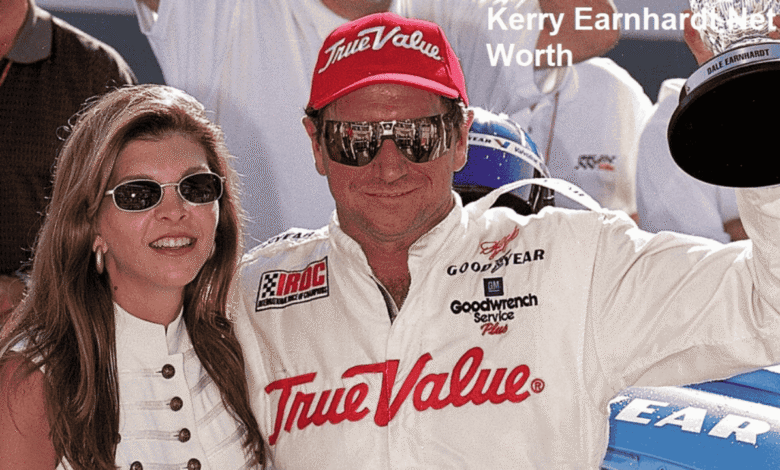
The name Earnhardt is synonymous with American stock car racing. It evokes images of sheer dominance, a relentless will to win, and a tragic legacy that forever changed the sport. When you hear it, your mind likely snaps immediately to the iconic, mustachioed visage of Dale Earnhardt Sr., the “Intimidator.” But the Earnhardt family tree has many branches, each with its own unique story of triumph, struggle, and identity. One of the most compelling and often overlooked narratives belongs to Kerry Earnhardt, the eldest son of the racing legend. For Kerry, life has been a complex journey of navigating the immense shadow of his father’s name while carving out a path entirely his own. This journey, filled with both promise and profound challenges, is the very foundation upon which his financial standing is built. Understanding Kerry Earnhardt’s net worth requires more than just a look at bank statements; it demands an exploration of a life lived in the high-octane world of professional racing, yet often on its periphery. It’s a tale of legacy, modest racing success, shrewd business ventures, and the immense, intangible value of carrying one of the most powerful names in sports history. We will delve into the driving forces, the missed opportunities, the business decisions, and the personal resilience that have collectively defined Kerry Earnhardt’s net worth and his place within the Earnhardt dynasty.
This article will take you through the various chapters of Kerry’s life, from his early years spent away from the glare of the spotlight to his tentative steps into the racing world. We will examine his professional racing career, which, while respectable, never quite reached the stratospheric heights of his father’s or half-brother’s. We will analyze the business acumen he demonstrated through ventures like driver development and, most notably, his foray into the world of custom home building. Furthermore, we will confront the difficult and painful aspect of his estrangement from his father for a significant portion of his life, and how that personal history shaped his opportunities and his approach to life and wealth. By weaving together these threads, we will arrive at a comprehensive and humanized understanding of what Kerry Earnhardt’s net worth truly represents—not just a financial figure, but the sum of a lifetime of perseverance, legacy, and hard-earned success on his own terms.


The Earnhardt Name: A Legacy of Victory and Pressure
To comprehend the context of Kerry Earnhardt’s net worth, one must first appreciate the colossal weight of the name he bears. The Earnhardt legacy is not merely a footnote in NASCAR history; it is one of its central pillars, a story of a blue-collar family from Kannapolis, North Carolina, that rose to conquer the world of motorsports. It begins with Ralph Earnhardt, Kerry’s grandfather, a legendary short-track racer known for his toughness and mechanical genius. He was a champion on the rough-and-tumble dirt tracks of the Carolinas, forging a reputation that would set the standard for the generations to follow. The grit, the determination, the sheer force of will—these were the traits ingrained in the Earnhardt DNA from the very start. Ralph’s success, though not measured in nationwide fame or immense wealth, established the family as a force to be reckoned with in the world of auto racing, creating a foundation of knowledge and a fierce competitive spirit that would be passed down.
The legacy exploded into national consciousness with the rise of Dale Earnhardt Sr. Kerry’s father took the blueprint laid down by Ralph and amplified it on a national stage. Dale Sr. didn’t just win races; he dominated them with a style that was both brutal and brilliant. His seven NASCAR Cup Series championships tied the record of the great Richard Petty, cementing his status as a king of the sport. The “Intimidator” persona was not just a marketing gimmick; it was a reflection of his driving style—fearless, aggressive, and uncompromising. This success translated into unprecedented wealth and fame. Dale Earnhardt Inc. (DEI) became a powerhouse team, a business empire that extended beyond the racetrack. For Kerry, this meant that from the moment he decided to pursue racing, the comparisons were inevitable and the expectations were astronomical. The Earnhardt name was both a golden ticket and a gilded cage, opening doors but also creating a standard of success that was nearly impossible to meet.
The Shadow of the Intimidator
Living under the shadow of Dale Earnhardt Sr. was a unique form of pressure that few can truly understand. For any aspiring racer, the path to NASCAR’s top levels is fraught with difficulty, demanding immense talent, funding, and luck. For Kerry Earnhardt, every move he made was scrutinized through the lens of his father’s legendary career. The media, the fans, and the industry itself watched his every qualifying attempt and race finish, constantly measuring him against the “Intimidator.” This constant comparison created an environment where even modest success could be framed as a disappointment, and any struggle was magnified. The expectation was not just to be good; it was to be great, to be a champion, to be the next coming of Dale Earnhardt. This psychological burden is an intangible yet crucial factor in the story of his career and, by extension, his financial journey.
The financial and relational dynamics within the family added another layer of complexity. While Dale Earnhardt Sr. eventually became a multi-millionaire mogul, Kerry’s early life was not one of privilege. His parents divorced when he was young, and he lived with his mother, Latane Brown, in a more modest setting, at times even living in a mobile home. This physical and emotional distance from his father’s world during his formative years meant he did not have the same immediate access to the resources and mentorship that his half-brother, Dale Earnhardt Jr., would later enjoy. This estrangement, which lasted for nearly two decades, meant that Kerry had to find his own way into racing, often without the direct financial backing or high-profile guidance of his famous father. This early independence undoubtedly shaped his character, fostering a resilience and a work ethic that would define his approach to both racing and business, but it also meant his path to building his net worth would be steeper and less assured than it might have otherwise been.
Kerry Earnhardt’s Racing Career: Forging His Own Path
Kerry Earnhardt’s journey into professional racing was not a pre-ordained coronation but a slow, deliberate grind. Unlike many second-generation drivers who are fast-tracked through the ranks with family support, Kerry’s entry was more organic, fueled by a genuine love for cars and competition that he shared with his famous lineage. He spent his late teens and early twenties working in construction and honing his skills on local short tracks, far from the gleaming superspeedways of the NASCAR circuit. This grassroots beginning was crucial. It was where he learned the craft of racing not as a celebrity’s son, but as just another driver trying to make a name for himself. He cut his teeth in the rough-and-tumble world of late model stock cars, learning how to set up a car, manage a race, and compete against seasoned local veterans. This period was less about fame and fortune and more about mastering the fundamentals, building a foundation of experience that would serve him throughout his career.
The step from local tracks to the national NASCAR scene is a monumental leap, one that requires not just talent but significant financial backing. Kerry’s famous name certainly got him a foot in the door for tryouts and tests that might have been closed to others, but it didn’t automatically come with a checkbook. His NASCAR debut came in 1998 in the Craftsman Truck Series, a tough, competitive series known for its close racing. He made his first start at the Milwaukee Mile, driving for a team called H.S. Die. This was a far cry from the well-funded operation of DEI, highlighting that he was being evaluated on his own merit. He continued to run a limited schedule in the Truck Series, showing flashes of potential and the familiar Earnhardt aggression, but without the consistent, top-tier equipment needed to compete for wins regularly. This phase of his career was about proving he belonged, a task he accomplished, but it also highlighted the financial realities of motorsports—without a major sponsor and a deep-pocketed team, sustained success was incredibly difficult to achieve.
Climbing the Ladder: Busch Series and Cup Series Glimpses
Kerry’s performances in the Truck Series eventually led to opportunities in what was then known as the NASCAR Busch Series (now Xfinity Series), a direct feeder league to the premier Cup Series. The most significant chapter of his Busch Series career was his time driving for Dale Earnhardt Inc. This was the period where the world got its clearest look at what Kerry Earnhardt could do in competitive equipment. In 2000 and 2001, he ran full seasons for DEI, and the results were a mixed bag that perfectly illustrated the pressures he faced. He secured a handful of top-five and top-ten finishes, demonstrating that he had the talent to run competitively at a high level. His best year was 2000, where he finished 14th in the championship standings. However, the shadow of his last name loomed large. He was driving for his father’s championship-winning organization, and the expectation was that he would dominate, or at least win races, just as his half-brother Dale Jr. had done in the same series.
The pressure was immense, and the results, while respectable for many drivers, were deemed underwhelming for an Earnhardt in DEI equipment. He did not visit victory lane in the Busch Series, and as DEI’s focus increasingly shifted to its Cup Series programs and the meteoric rise of Dale Earnhardt Jr., Kerry’s seat became less secure. Following the tragic death of his father in 2001, the dynamics at DEI shifted dramatically. Kerry found himself with fewer opportunities within the team. He made a handful of starts in the NASCAR Cup Series, the pinnacle of the sport, between 2000 and 2005 for various teams, including a single start for DEI at the 2005 Daytona 500. These Cup starts were the culmination of his racing dream, but they were also sporadic. Without a full-time, well-funded ride, he was unable to establish the consistency needed to succeed at that level. His Cup career consisted of 13 starts, a small sample size that provided a glimpse of what might have been but ultimately fell short of launching him into stardom.
The Financial Realities of a Mid-Tier Racing Career Kerry Earnhardt Net Worth
The economics of professional racing are brutal and binary. The top-tier drivers, the winners and champions, command eight-figure salaries, lucrative endorsement deals, and a share of prize money that can set them up for life. However, for the vast majority of drivers who compete in the mid-pack or in lower series, the financial picture is starkly different. Kerry Earnhardt’s net worth from his active racing days was built on the earnings of a journeyman driver. While driving for DEI in the Busch Series, he would have earned a respectable salary, likely in the low to mid six figures, a sum that is life-changing for most people but pales in comparison to the earnings of a Cup Series star. Prize money, or purse winnings, are also heavily skewed towards the front of the field; consistent top-15 finishes do not generate the same kind of income as winning races.
Furthermore, the lack of sustained success at the highest level limited his marketability for major national endorsements. While he certainly had sponsorship deals and personal appearances due to the Earnhardt name, they were not on the scale of what his father or brother enjoyed. Drivers in his position often have to spend a significant portion of their income on expenses related to maintaining their career, from personal training to travel and management fees. The constant struggle to secure funding for the next race or the next season creates financial instability. For Kerry, his racing career provided a solid living and allowed him to build a foundation of wealth, but it was not the primary driver of his long-term net worth. It was, instead, a platform that gave him visibility and experience, which he would later leverage into more stable and lucrative business ventures outside the driver’s seat. The table below provides a simplified overview of the key financial drivers in his racing career.
| Career Aspect | Financial Impact on Net Worth | Key Details |
| Late Model / Short Track Racing | Negative / Neutral | Often self-funded or with small sponsors. High costs with little monetary return, focused on gaining experience. |
| NASCAR Craftsman Truck Series | Modest Positive | Earned a driver salary and prize money, but rides were often with underfunded teams, limiting earnings potential. |
| NASCAR Busch Series with DEI | Significant Positive | Peak earning years from salary and winnings. Likely a solid six-figure income, providing a financial foundation. |
| NASCAR Cup Series Appearances | Modest Positive | Higher prize money per race, but limited number of starts and often with less competitive teams. |
| Endorsements & Appearances | Supplemental Positive | Leveraged the Earnhardt name for deals, but not at the elite level of a top Cup driver. |
Life Beyond the Driver’s Seat: Business Ventures and Brand Building
As his opportunities for a full-time, competitive ride in NASCAR’s top series began to dwindle, Kerry Earnhardt demonstrated the same pragmatism and work ethic that had characterized his early life. He understood that a long-term financial future would not be found solely behind the wheel. Instead of clinging to a fading racing dream, he strategically pivoted, leveraging his two greatest assets: the Earnhardt name and his own hands-on experience. This transition from driver to entrepreneur is arguably the most critical chapter in the story of Kerry Earnhardt’s net worth. It showcases a level of business acumen that has allowed him to build a stable and significant financial portfolio far removed from the volatile world of professional athletics. While the glory of victory lane is intoxicating, the steady, compounding growth of a successful business often leads to more enduring wealth, and Kerry seems to have mastered this transition with quiet effectiveness.
One of his first major post-racing ventures kept him close to the sport he loved. He co-founded Driver Design, a company focused on driver development. This venture tapped directly into his own experiences. Having navigated the difficult path from local tracks to NASCAR’s national series, Kerry was uniquely positioned to mentor young, aspiring drivers. He understood the technical, mental, and financial challenges they faced. Driver Design offered services like coaching, marketing, and career management, essentially providing a roadmap for the next generation. This business allowed him to monetize his hard-earned knowledge and maintain a presence in the racing community. It was a smart, niche play that complemented his personal brand as a seasoned veteran who understood the grind. While the financial details of Driver Design are private, it represented a steady stream of income and demonstrated his ability to identify a market need and fill it.
Slaughter Earnhardt Homes: Building a Lasting Legacy
If Driver Design kept one foot in the racing world, Kerry’s most prominent and financially impactful venture planted him firmly in an entirely different industry: custom home building. Along with his business partner, Steve Slaughter, he founded Slaughter Earnhardt Homes, a residential construction company based in North Carolina. This was not a simple celebrity endorsement or a passive investment; Kerry has been actively involved in the day-to-day operations of the company, often seen on job sites and involved in the design and sales processes. The decision to enter the home building business was a masterstroke. It leveraged the powerful, trusted Earnhardt brand—associated with quality, durability, and American values—and applied it to a stable, high-value industry. For potential homeowners in the Carolinas, having a house built by an Earnhardt carries a certain cachet and implied promise of craftsmanship.
The success of Slaughter Earnhardt Homes has been a cornerstone of Kerry Earnhardt’s net worth. The company has established a strong reputation for building quality custom homes in various communities across North Carolina. The real estate and construction markets, while cyclical, have historically been excellent long-term wealth builders. As a principal in the company, Kerry’s income is tied to its profitability, which includes revenue from building and selling spec homes as well as working with clients on custom projects. This business provides a level of financial stability and growth potential that far exceeds what is possible for most mid-tier professional athletes after their playing days are over. It has allowed him to build equity in a tangible asset—real estate—and create a self-sustaining enterprise that is not dependent on his physical performance or fame. This venture is the clearest indicator of his business savvy and is likely the single largest contributor to his financial standing today.
Other Ventures and Personal Appearances
Beyond his primary businesses, Kerry Earnhardt’s net worth is supplemented by a variety of other income streams that capitalize on his legacy and persona. He remains a popular figure on the NASCAR nostalgia and appearance circuit. He makes regular guest appearances at race tracks, fan festivals, and corporate events, where he signs autographs, takes photos, and shares stories about his career and his family. These appearances are a lucrative business for any personality with a recognizable name, and the Earnhardt name is arguably the most recognizable in the history of the sport. While he may not command the same fees as a current superstar, his unique position as the eldest son of Dale Earnhardt Sr. ensures a steady demand for his presence.
He has also been involved in various licensing and merchandise deals over the years. From die-cast model cars bearing his likeness to apparel and other memorabilia, there is a consistent, albeit niche, market for Kerry Earnhardt collectibles. These deals typically involve royalty payments, providing passive income based on sales. Additionally, he has participated in documentary films, television specials, and authored books about the Earnhardt family, all of which contribute to his overall income. It’s important to view these ventures not as isolated moneymakers but as interconnected parts of a broader personal brand strategy. Every appearance, every licensed product, and every business success reinforces the others, creating a diversified financial portfolio that is resilient and growing. He has managed his brand with a quiet dignity, avoiding the spotlight when necessary but leveraging it effectively to build a secure and prosperous life for himself and his family.
The Personal Story: Family, Estrangement, and Its Impact
Any deep exploration of Kerry Earnhardt’s life and net worth would be incomplete without acknowledging the profound and often painful personal history that shaped his journey. His relationship with his father, Dale Earnhardt Sr., is a central, complex, and sometimes heartbreaking part of his narrative. Kerry was born from Dale’s first marriage to Latane Brown, a union that ended when Kerry was still very young. Following the divorce, Kerry lived with his mother and, for a significant period of nearly eighteen years, had very little contact with his famous father. This estrangement meant that Kerry’s childhood and adolescence were not spent in the privileged world of a racing superstar. He grew up in a more typical, modest environment, at one point even living in a mobile home. This early life experience instilled in him a sense of normalcy and a blue-collar work ethic that would become a defining characteristic.
This lengthy separation had undeniable consequences for his racing career. While he shared his father’s innate talent and love for cars, he did not have the benefit of Dale Sr.’s direct mentorship, guidance, or financial backing during his formative years as a driver. When other second-generation drivers were being groomed in state-of-the-art simulators and given the best equipment from a young age, Kerry was learning the trade the hard way on local tracks, largely on his own dime. By the time they reconnected and Kerry began driving for DEI, a significant amount of time had been lost. Dale Earnhardt Jr., Kerry’s half-brother, who had grown up with their father’s constant involvement, was already on a fast track to stardom. This dynamic created an unspoken but palpable sense of competition and comparison, both within the family and in the public eye. The “what if” question looms large: what if Kerry had had his father’s direct support from the beginning? It’s a question that undoubtedly affected his opportunities and the trajectory of his racing career, which in turn influenced his early financial earning potential.
Reconciliation and Its Limitations
Kerry and Dale Earnhardt Sr. did eventually reconnect and build a relationship in the years leading up to Dale’s tragic death in 2001. Kerry began spending more time with his father, and it was during this period that he got his shot driving for DEI in the Busch Series. By all accounts, they were developing a genuine bond, finding common ground in their shared passion for racing and mechanical work. Dale Sr. even served as a spotter for Kerry in one of his first Busch Series races, a poignant public display of support. However, the reconciliation, while meaningful on a personal level, had its professional limitations. Kerry was already a grown man with his own established style and experiences by the time he entered the DEI fold. He wasn’t a young prospect to be molded from scratch; he was a veteran driver trying to adapt to a top-tier team.
Furthermore, the DEI of the early 2000s was a corporation, a massive business operation with multiple drivers, sponsors, and stakeholders to consider. Dale Earnhardt Sr. may have been the owner, but he had to make decisions that were in the best interest of the entire company. The undeniable, rocket-like ascent of Dale Earnhardt Jr. demanded a significant portion of the team’s resources and attention. When Kerry’s performance in the Busch Series did not yield wins, the business decision was made to scale back his involvement. This was likely a difficult reality for both father and son. The tragic accident at Daytona in 2001 cut short any possibility of this relationship evolving further. Dale’s death left Kerry in a difficult position, both personally and professionally. The primary advocate for his career within DEI was gone, and the team’s direction shifted under new leadership. This personal loss solidified Kerry’s need to forge his own path completely independent of the DEI empire, a necessity that ultimately led him to the business successes that define his net worth today.
The Earnhardt Family Today
Despite the complexities of the past, Kerry Earnhardt has carved out a stable and fulfilling family life of his own. He is married to Rene Earnhardt, and together they have raised a family. His children have, to some extent, followed in the family’s footsteps, with his son, Bobby Earnhardt, pursuing a racing career in lower-tier series. Kerry has been supportive of his son’s ambitions, offering guidance from his own experiences and likely helping him avoid some of the pitfalls he encountered. In many ways, Kerry’s relationship with his own children appears to be the inverse of his experience with his father—present, supportive, and actively involved. This stable personal foundation has undoubtedly provided him with the emotional security to focus on building his businesses and managing his wealth effectively.
Within the broader Earnhardt dynasty, Kerry maintains a respectful, if somewhat private, relationship with his half-siblings, including Dale Earnhardt Jr. They have appeared together at public events, family functions, and in interviews, always speaking of each other with respect and affection. There is no public indication of any major rift or feud. Dale Jr. has often spoken kindly of Kerry, acknowledging the different paths they walked. Kerry seems to have found a sense of peace with his place in the family legacy. He is not the champion his father was, nor is he the media superstar his half-brother became. He is Kerry Earnhardt—a racer, a businessman, a family man, and a steward of the name. This self-acceptance has allowed him to leverage his legacy without being consumed by it, a balance that has proven to be financially astute and personally rewarding.
Analyzing Kerry Earnhardt’s Net Worth: A Comprehensive Estimate
Arriving at a precise figure for Kerry Earnhardt’s net worth is an exercise in estimation, as he, like most private individuals, does not publicly disclose his financial statements. However, by synthesizing the various income streams, assets, and business ventures we’ve detailed, a well-reasoned and credible figure can be established. Most reputable online sources, such as Celebrity Net Worth and various sports financial publications, consistently estimate Kerry Earnhardt’s net worth to be in the range of $1.5 million to $2 million. This range appears to be a realistic and logical assessment when all factors are considered. It reflects the earnings of a successful professional who had a solid but not superstar-level racing career, combined with the profits from a thriving small-to-mid-sized business and other ancillary income. It is a testament to a life of hard work and smart financial planning rather than fleeting, explosive wealth.
It is crucial to understand what this net worth figure represents and, just as importantly, what it does not. A net worth of approximately $1.5 million to $2 million places Kerry Earnhardt in the category of being financially secure and successful by any standard. It signifies ownership of assets like a primary residence, likely other real estate investments, ownership equity in Slaughter Earnhardt Homes, and various savings and investment accounts. This level of wealth affords a comfortable, upper-middle-class lifestyle, free from financial worry. However, it is also essential to contextualize this within the sphere of his famous family. This net worth is a fraction of the fortune amassed by his father, Dale Earnhardt Sr., who was worth tens of millions at the time of his death, or his half-brother, Dale Earnhardt Jr., whose net worth is estimated to be over $300 million, fueled by a Hall of Fame racing career, massive broadcasting contracts, and a vast business empire. This disparity is not a mark of failure but rather a reflection of the vastly different career trajectories and opportunities each man experienced.
Breaking Down the Components of Wealth
To fully appreciate the estimate of Kerry Earnhardt’s net worth, let’s deconstruct it into its primary components. First and foremost is the equity and ongoing income from Slaughter Earnhardt Homes. As a co-owner of an established custom home building company, his stake in this business is likely the most significant single asset in his portfolio. The value of this business, combined with the annual salary and profit distributions he draws from it, forms the bedrock of his financial stability. This is a classic example of building business equity—creating an asset that has value in itself and generates consistent income. The success of this venture demonstrates that his most lucrative talent may not have been driving a race car, but rather building a company from the ground up.
The second major component is the wealth accumulated from his racing career. While this was not the primary driver of his long-term net worth, it provided the initial capital that likely helped him launch his business ventures. His earnings from salaries and prize money during his peak years with DEI in the Busch Series would have been substantial enough to invest and serve as startup capital. The third component is his collection of personal assets, including his primary home and any other real estate or investments he holds. The fourth and final component is his ongoing income from personal appearances, licensing, and royalties. This is the “Earnhardt name” premium at work—a steady, low-effort stream of income that capitalizes on the enduring legacy of his family. Together, these four pillars—business equity, racing career capital, personal assets, and legacy income—form a diversified and resilient financial foundation that supports the estimated $1.5 million to $2 million net worth.
The Intangible Value of the Earnhardt Name
While we can assign dollar values to businesses and salaries, there is an intangible aspect to Kerry Earnhardt’s net worth that is impossible to quantify but absolutely essential to acknowledge: the value of the Earnhardt name itself. In the world of marketing and brand recognition, the Earnhardt name is a priceless asset. It commands immediate attention, trust, and a deep emotional connection with millions of fans. For Kerry, this name has been a double-edged sword, but from a purely business perspective, it has been an invaluable tool. It provided the initial credibility that allowed Slaughter Earnhardt Homes to gain a foothold in a competitive market. Would a construction company called “Slaughter and Associates” have grown as quickly without the Earnhardt name? Almost certainly not.
This brand equity opens doors, generates phone calls, and secures meetings that would otherwise be difficult to obtain. It is a form of social capital that has direct financial benefits. When Kerry makes a personal appearance, he is paid not just for his time, but for the access he provides to the Earnhardt legend. This intangible value does not show up directly on a balance sheet, but it permeates every income-generating activity he undertakes. It is the hidden multiplier that enhances the value of his tangible assets and efforts. In many ways, his entire financial story is about learning to harness and monetize this intangible asset in sustainable and respectable ways, moving beyond the racetrack to create a legacy that is uniquely his own, yet forever intertwined with the power of his name.
<h3>What is Kerry Earnhardt’s primary source of income today?</h3> Kerry Earnhardt’s primary source of income is no longer racing; it is his business ventures, with Slaughter Earnhardt Homes being the most significant. As a co-owner and active principal in this custom home building company, his income is derived from the profits and salary generated by the business. This venture represents a stable and substantial financial foundation that has likely surpassed his peak earnings from his driving days.<h3>How does Kerry Earnhardt’s net worth compare to Dale Earnhardt Jr.’s?</h3> The difference in their net worth is substantial. Kerry Earnhardt’s net worth is estimated to be between $1.5 and $2 million, which reflects a successful life as a businessman and former racer. In contrast, Dale Earnhardt Jr.’s net worth is estimated to be well over $300 million. This disparity stems from Dale Jr.’s massively successful career as a top-tier Cup Series driver and two-time Xfinity Series champion, his lucrative long-term broadcasting contract with NBC, and his ownership of JR Motorsports, a highly successful racing team, and other business interests.<h3>Did Kerry Earnhardt inherit any money from his father, Dale Earnhardt Sr.?</h3> The details of Dale Earnhardt Sr.’s will have remained largely private, but it is widely reported that the bulk of his estate, including controlling interest in Dale Earnhardt Inc., was left to his third wife, Teresa Earnhardt. As one of Dale Sr.’s children, Kerry almost certainly received some form of inheritance, but it was likely not a controlling or life-changing sum on the scale of the overall estate, which was valued in the tens of millions. His wealth appears to be self-made through his career and business acumen rather than inherited.<h3>Is Kerry Earnhardt still involved in NASCAR?</h3> Kerry Earnhardt is no longer an active competitor in NASCAR. His last official start was in 2005. However, he remains connected to the sport through his son Bobby’s racing endeavors, through occasional personal appearances at tracks and fan events, and through his past work with driver development. He is a part of the NASCAR community, but in a legacy and ambassadorial role rather than as an active participant.
“I’ve always been around racing, and I’ve always loved it. But I also knew I had to build something for myself and my family that would last beyond my driving days.” – This quote embodies Kerry Earnhardt’s pragmatic and forward-thinking approach to his career and finances.
“The name opens doors, but you still have to deliver once you’re inside.” – A sentiment often echoed by those carrying a famous legacy, this reflects Kerry’s understanding that the Earnhardt name provided opportunities, but sustained success depended on his own hard work and performance, whether on the track or in business.
Conclusion
The story of Kerry Earnhardt’s net worth is far more than a financial statement; it is a deeply human narrative about identity, resilience, and redefining success on one’s own terms. Born into one of the most famous families in sports, he faced a unique set of challenges, from a prolonged estrangement from his legendary father to the immense pressure of public expectation. His racing career, while falling short of the mythical standard set by the “Intimidator,” was a respectable journey of a talented driver who achieved what only a tiny fraction of aspirants ever do—competing at the national level in NASCAR. The earnings from this career provided a launchpad, but they were not the destination.
Kerry Earnhardt’s true financial success and the solidification of his net worth came from his intelligent and determined pivot into the business world. By co-founding Slaughter Earnhardt Homes, he demonstrated remarkable foresight and business acumen. He took the powerful, intangible asset of his name and translated it into a tangible, thriving enterprise in a stable industry. This move, complemented by ongoing income from appearances and licensing, has allowed him to build a secure and prosperous life. His estimated net worth of $1.5 million to $2 million is a testament not to the privilege of his birth, but to the power of hard work, adaptability, and the Kerry Earnhardt Net Worth quiet perseverance required to build a legacy that, while forever connected to his father’s, is unmistakably and proudly his own. Kerry Earnhardt’s story is ultimately one of triumph—a triumph of character over circumstance, and of smart, steady building over fleeting fame.