Unlocking the Shadows: The Ultimate Guide to the Rogue 5e in Dungeons & Dragons 5th Edition

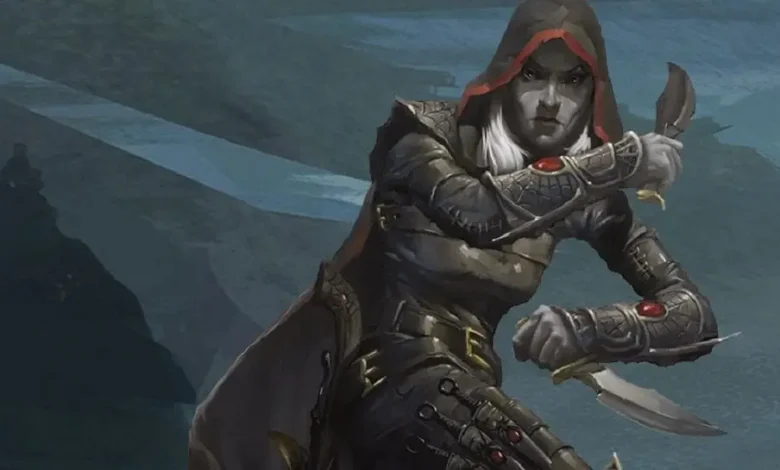
So, you want to be a rogue 5e? You’ve felt the pull of the shadowed alley, the whisper of a perfectly balanced dagger, the allure of a lock that nobody else can crack. In the vast tapestry of Dungeons & Dragons 5th Edition, the rogue 5e stands as a testament to skill, precision, and cunning. This isn’t just a class; it’s a philosophy. Where the fighter meets problems with overwhelming force and the wizard with reality-bending magic, the rogue 5e approaches challenges with a sharp mind, sharper tools, and an uncanny ability to be exactly where they need to be—often rogue 5eunseen and unheard. This guide is your master key to understanding this iconic class. We’ll delve deep into the mechanics that make it tick, explore the subtle art of specialization through archetypes, and uncover the strategies that separate a clumsy cutpurse from a legendary master of the trade. Whether you’re a seasoned player looking to optimize or a newcomer drawn to the allure of stealth and style, understanding the rogue 5e is your first step into a larger, and more thrilling, world.
The beauty of the rogue 5e lies in its glorious versatility. At its core, the class is built upon a foundation of Expertise and Sneak Attack, two features that empower you to excel in non-combat interactions and deal devastating damage in a fight, respectively. But to call a rogue 5e just a “damage dealer” or a “skill monkey” is to miss the point entirely. A well-played rogue 5e is the party’s scout, infiltrator, trap-disarmer, negotiator, and information broker. They are the character who turns the tide not with a fiery explosion, but with a well-placed shot at the enemy spellcaster, a crucial piece of intelligence gathered the night before, or a social encounter deftly maneuvered in the party’s favor. Playing a rogue 5e means embracing a playstyle that values intelligence gathering, tactical positioning, and creative problem-solving over brute strength. It’s about knowing that sometimes the most powerful action you can take is to Hide as a bonus action, setting up the perfect strike for next turn.

The Foundational Pillars of the Rogue
Every iconic rogue 5e character, from the charismatic swashbuckler to the ghostly phantom, is built upon a few fundamental class features. These are the non-negotiable elements that define the rogue’s identity in the game’s mechanics. Understanding these is crucial, as they inform every decision you’ll make, from ability score allocation to feat selection and archetype choice. Let’s break down these core pillars, starting with the one feature that arguably defines the class’s combat role more than any other: Sneak Attack.
Sneak Attack is the rogue 5e‘s primary contribution to damage output in a fight, and it’s often misunderstood. It’s not about sneaking in the literal sense (though that can help); it’s about exploiting an opponent’s distraction. The rules state you can use Sneak Attack once per turn if you have advantage on the attack roll, or if another enemy of the target is within 5 feet of it (and you don’t have disadvantage). This means a savvy rogue 5e is always looking for flanking positions or ways to gain advantage, often working in tandem with the party’s frontline fighters. The damage scales beautifully as you level up, adding more d6s to your weapon strike. This turns even a simple dagger or shortbow shot into a potentially fight-ending blow. It encourages a playstyle of single, precise strikes rather than multiple attacks, making every action count.
The second pillar is Expertise. At 1st level, and again at 6th, you choose a number of skill or tool proficiencies and double your proficiency bonus for any ability check that uses them. This is what makes the rogue 5e the undisputed master of skills in D&D 5e. A high-level rogue 5e can have a +17 bonus to Stealth or Thieves’ Tools checks, making failure almost impossible. This feature allows you to define your character’s niche beyond combat. Are you the ultimate infiltrator with Expertise in Stealth and Sleight of Hand? The party’s face with Expertise in Deception and Persuasion? Or perhaps the keen-eyed investigator with Expertise in Perception and Investigation? Expertise gives you the mechanical heft to back up your character’s story.
Beyond these two giants, other key features round out the rogue 5e toolkit. Cunning Action, gained at 2nd level, is arguably the best bonus action in the game. It allows you to Dash, Disengage, or Hide as a bonus action on each of your turns. This unparalleled mobility lets you dart in and out of combat, reposition without provoking attacks of opportunity, and set up new hiding spots to gain advantage for your Sneak Attack. It embodies the hit-and-run, elusive nature of the class. Uncanny Dodge (5th level) and Evasion (7th level) are your premier defensive features, allowing you to halve the damage from one attack you can see or take no damage from certain area effects on a successful Dexterity save. Together, they make the surprisingly durable rogue 5e a frustrating target who can survive situations that would flatten other lightly-armored characters.
Choosing Your Roguish Archetype

At 3rd level, your rogue 5e chooses a Roguish Archetype. This is where the class truly blossoms, allowing you to specialize and define your character’s unique flavor and capabilities. rogue 5e Each archetype offers new ways to use your Sneak Attack, enhances your skills, or grants entirely new magical or martial abilities. Your choice here will significantly shape your playstyle and role within the party. We’ll explore some of the most popular and impactful options, from those in the Player’s Handbook to fantastic additions from supplemental books.
The Thief archetype is the classic. It enhances your core rogue 5e capabilities, making you better at using tools and moving through the environment. Its Fast Hands feature lets you use the Use an Object action as a bonus action, which includes applying poison, drinking a potion, or throwing caltrops. Supreme Sneak at 9th level gives you advantage on Stealth checks when moving slowly, and Use Magic Device at 13th level breaks all class and race restrictions on magic items. The Thief is the purest expression of a skilled, non-magical adventurer who relies on wits and gear. It may not have the flash of other archetypes, but its flexibility and reliability are unmatched for a player who loves creative problem-solving with mundane equipment.
For those who want to blend shadow and spell, the Arcane Trickster is a perfect choice. This archetype grants you a limited selection of wizard spells, focusing on enchantment and illusion magic. Your spellcasting ability is Intelligence, so you’ll need to balance that with your core Dexterity. The features are wonderfully thematic: Mage Hand Legerdemain lets you perform tasks with an invisible, extended-range mage hand, perfect for pickpocketing at a distance or disarming traps from safety. Versatile Trickster later allows that same hand to grant you advantage on attacks, synergizing perfectly with Sneak Attack. An Arcane Trickster rogue 5e can confuse guards with silent image, charm a noble with charm person, or vanish with invisibility, adding a whole new dimension of trickery to the class.
If social intrigue and dueling prowess are your goals, the Swashbuckler (from Xanathar’s Guide to Everything) is your archetype. It transforms the rogue 5e from a purely stealthy assassin into a charismatic duelist who thrives in one-on-one combat. Fancy Footwork allows you to freely disengage from any creature you make a melee attack against, making you an incredibly mobile skirmisher. Rakish Audacity lets you add your Charisma modifier to your initiative and, crucially, allows you to use Sneak Attack against a creature if no other creatures are within 5 feet of you. This means you don’t always need an ally nearby or advantage to trigger your signature move. The Swashbuckler excels in social situations and dramatic, toe-to-toe combat, offering a very different but equally potent rogue 5e experience.
Building the Perfect Rogue
Crafting an effective rogue 5e character sheet involves more than just maxing out Dexterity. It’s a careful balancing act of ability scores, race, background, and potentially feats to create a character that fulfills your desired fantasy and performs well at the table. Your choices here will support the archetype you’ve chosen and define your capabilities in and out of combat. Let’s start with the most important ability score: Dexterity. It is non-negotiable for any rogue 5e. It governs your attack and damage with finesse and ranged weapons, your Armor Class, your key skills (Stealth, Sleight of Hand, Acrobatics), and a common saving throw. You’ll want this to be 20 as soon as possible.
Your second-highest score depends heavily on your archetype and desired role. For a Swashbuckler or a face character, Charisma is paramount. For an Arcane Trickster, Intelligence is critical for spellcasting. For a more observant or insightful rogue, Wisdom can boost Perception and Insight. Constitution is always valuable for more hit points. When selecting a race, look for bonuses to Dexterity and these secondary scores. Variant Human remains a powerhouse choice for its free feat at 1st level, allowing for early access to crucial feats like Crossbow Expert or Mobile. Elves, especially Wood Elves (bonus to Dex and Wis, extra movement, Mask of the Wild) and Eladrin (bonus to Dex and Cha, a teleport), are classic and potent choices. Halflings, with their Dexterity bonus and Lucky trait to reroll natural 1s, make wonderfully lucky and nimble rogues. Newer options like the Harengon from The Wild Beyond the Witchlight offer a phenomenal Dexterity boost and a bonus to initiative.
Feats can elevate your rogue 5e from great to extraordinary. Because rogues get an Ability Score Improvement (or feat) at more levels than most classes (every four levels), you have room to customize. Some top-tier choices include:
- Sharpshooter: For ranged rogues, ignoring cover and long range is huge, though the -5/+10 trade is risky without a high attack bonus.
- Crossbow Expert: Allows you to make a hand crossbow attack as a bonus action (great for an extra chance to apply Sneak Attack if you miss your main action) and removes the disadvantage for being in melee.
- Mobile: Synergizes incredibly well with melee rogues, especially Swashbucklers, allowing you to weave in and out of combat without provoking attacks.
- Magic Initiate: Can grant you useful cantrips like Booming Blade (which synergizes amazingly with a hit-and-run style) and a 1st-level spell like find familiar to gain advantage for Sneak Attack.
- Skill Expert: Grants a +1 to an ability, proficiency in one skill, and Expertise in one skill. Perfect for rounding out an odd score and deepening your skill mastery.
The Rogue in Play: Tactics and Teamwork
Understanding your character sheet is one thing, but knowing how to leverage your abilities at the gaming table is where the rogue 5e truly comes alive. This class demands a tactical mind and a strong sense of teamwork. You are not a lone wolf; you are a precision instrument that works best when harmonizing with your party. Let’s discuss combat tactics first. Your primary goal in most fights is to ensure you can apply your Sneak Attack damage every single round. This requires either advantage on your attack roll or an ally within 5 feet of your target. Communication is key. Tell your fighter or barbarian, “I’m sticking with you to flank!” Use your Cunning Action to Hide (if you have sufficient cover) and gain advantage for your next attack. Remember, you only get one Sneak Attack per turn, but features like the Battle Master fighter’s Commander’s Strike or your own opportunity attacks can let you apply it on someone else’s turn as a reaction, effectively doubling your damage output in a round.
Your role extends far beyond dealing damage. Use your incredible mobility to harass enemy spellcasters and archers in the backline. With Cunning Action: Dash, you can cover immense distances. Your high Dexterity saves and Evasion make you the ideal character to brave traps and area-effect spells to accomplish a specific goal, like pulling a lever or grabbing a macguffin. Outside of combat, you are the party’s primary scout. Use Stealth and Perception to safely reconnoiter ahead. Your Expertise in Thieves’ Tools makes you the designated lock-picker and trap-disarmer. In social situations, your skills in Deception, Persuasion, or Intimidation (especially with Expertise) can steer negotiations, gather rumors, or bypass guards entirely. A rogue 5e player should always be thinking three steps ahead, looking for the angle, the hidden path, or the unspoken weakness to exploit.
Teamwork cannot be overstated. Your relationship with the frontline martials is symbiotic—you give them a deadly ally in melee, and they give you your Sneak Attack condition. Spellcasters can be your best friends. A wizard’s faerie fire spell grants you advantage on all attacks against affected creatures. A cleric’s guidance cantrip can boost your crucial skill checks. In return, you protect them from enemy skirmishers. You might use your high Perception to spot an ambush the party would otherwise walk into, or your Sleight of Hand to plant evidence or steal a key item. The rogue 5e shines as the connective tissue of the party, enabling plans that other classes simply cannot execute alone. Embrace this role, and you’ll find your contributions are invaluable, even on rounds where you don’t roll a single die.
Equipment and Magic Items for the Discerning Rogue
Your starting gear as a rogue 5e sets the tone for your adventuring career. The classic loadout includes a rapier (for the finesse property and d8 damage die) and a shortbow for ranged options, paired with leather armor. Many players also choose two shortswords or scimitars for the potential off-hand attack (though remember, the bonus action attack doesn’t add your ability modifier to damage unless you have the Two-Weapon Fighting style from a feat or multiclass). Thieves’ Tools are, of course, mandatory. As you progress, look for magical versions of these staples. A *+1 rapier* or *+1 shortbow* is always welcome, but the real treasures are items that expand your capabilities.
Magic weapons like a sword of life stealing or a dagger of venom add potent effects to your single, devastating strike. Armor such as *studded leather +2* or the glamorous elven chain (which can be worn without proficiency) boost your survivability. But the most fun items for a rogue 5e are often the utility-based wonders. A cloak of elvenkind grants advantage on Stealth checks, while boots of elvenkind make your movement silent. A hat of disguise or a ring of mind shielding is invaluable for infiltration. The gloves of thievery give a +5 bonus to Sleight of Hand and Thieves’ Tools checks, making you nearly infallible. For the Arcane Trickster, items that boost spellcasting or grant additional spells, like a wand of magic missiles or a pearl of power, are incredibly useful.
Don’t overlook common and uncommon consumables either. Ball bearings, caltrops, and hunting traps can be deployed with Fast Hands (Thief feature) to control the battlefield. Poisons, though often expensive and with saving throws, can add nasty riders to your attacks. rogue 5e A potion of invisibility or a scroll of passwall can be the key to solving an otherwise impossible problem. The true mark of an expert rogue 5e player is knowing not just how to use their core features, but how to leverage every item in their inventory to create opportunities and escape dire straits. Your backpack is as much a part of your toolkit as your Sneak Attack.
Multiclassing: Expanding Your Roguish Horizons
Sometimes, a pure rogue 5e doesn’t quite capture the specific concept you have in mind. Multiclassing can offer powerful synergies and unique flavor, but it comes at the cost of delaying your core rogue features, especially your Sneak Attack dice and Uncanny Dodge/Evasion. It should be done with a clear goal in mind. One of the most popular and potent dips is a one to three-level investment in Fighter. A single level gets you a Fighting Style (Archery for +2 to hit with ranged weapons is fantastic, or Defense for +1 AC) and Second Wind for a bit of healing. Two levels gets you Action Surge, allowing for incredible nova rounds or complex skill-based actions. Three levels can get you a Martial Archetype; Battle Master for maneuver versatility or Champion for an improved critical range (which synergizes wonderfully with Sneak Attack’s many dice) are top picks.
For the magically inclined rogue 5e, a dip into wizard can greatly expand an Arcane Trickster’s spell selection and slots, especially if you choose the Bladesinging tradition (from Sword Coast Adventurer’s Guide or Tasha’s Cauldron of Everything), which boosts AC, concentration, and movement. A two-level dip into Warlock can be incredibly thematic and potent. The Hexblade patron allows you to use Charisma for attack and damage with one weapon, perfect for a Swashbuckler, and grants access to the shield spell and the devastating eldritch blast cantrip. The Invocation “Devil’s Sight” combined with the darkness spell can create a powerful, if party-unfriendly, combo for generating advantage.
Another classic combination is Rogue/Ranger. The two classes share a Dexterity-based, skirmisher mentality. A three-level dip into Gloom Stalker Ranger (from Xanathar’s Guide) is a powerhouse for scouts and assassins, granting extra movement and an attack on your first turn, darkvision (or improved darkvision), and the disguise self spell. Remember, every level you take in another class is a level you are not increasing your Sneak Attack damage or gaining crucial rogue features. Most multiclass builds aim for a specific benchmark in rogue (often 3 for archetype, 5 for Uncanny Dodge, or 7 for Evasion) before branching out, or start with a level in another class for proficiencies before diving deep into rogue.
The Rogue’s Journey: Level-by-Level Progression
Watching your rogue 5e grow from a fledgling scoundrel to a master of shadows is one of the great joys of D&D. The progression is smooth, with meaningful features at almost every level. Let’s walk through the key milestones. At 1st level, you get your defining out-of-combat feature (Expertise) and your in-combat signature (Sneak Attack). 2nd level brings Cunning Action, which fundamentally changes how you play. 3rd level is your Roguish Archetype, a massive power and flavor spike. 4th level is your first Ability Score Improvement, likely boosting Dexterity to 18. 5th level brings Uncanny Dodge, a fantastic defensive tool, and your Sneak Attack increases to 3d6.
Levels 7 (Evasion) and 8 (another ASI) solidify your defenses and offensive accuracy. 11th level brings Reliable Talent, arguably one of the strongest non-combat features in the game: whenever you make an ability check that uses your proficiency bonus, you can treat a d20 roll of 9 or lower as a 10. This means your minimum skill check with Expertise becomes a 10 + 2x Proficiency Bonus + Ability Modifier—for many checks, your minimum result is in the high teens or twenties. It’s a game-changer for reliability. Your second round of Expertise at 6th and your final ASIs at 10, 12, 16, and 19 offer incredible customization. The capstone at 20th level, Stroke of Luck, lets you turn a missed attack into a hit or a failed ability check into a success once per short rest, a fitting final “ace up the sleeve” for the ultimate rogue 5e.
Crafting a Compelling Rogue Character
While mechanics are vital, a rogue 5e is more than just a collection of features. They are a character with a story, motives, and personality. The classic tropes—the orphaned urchin, the disgraced noble, the retired spy—are classics for a reason, but don’t be afraid to subvert expectations. Perhaps your rogue is a lawful-neutral inquisitor who uses their skills to extract confessions and root out corruption. Maybe they are a cheerful, curious archaeologist (Expertise in History and Thieves’ Tools) who “liberates” artifacts for study. They could be a former soldier whose talents in stealth and reconnaissance naturally led them to a life of adventure.
Your Background should reinforce this story. The Criminal/Spy background is an obvious fit, offering Deception and Stealth proficiencies. But consider the Charlatan for Deception and Sleight of Hand, the Urchin for Sleight of Hand and Stealth, or the Noble for History and Persuasion. The new backgrounds in supplemental books offer even more: the Investigator (from Van Richten’s Guide to Ravenloft) or the Faction Agent (from Sword Coast Adventurer’s Guide). Your bond, flaw, and ideal will help you roleplay consistently. How does your character feel about their Sneak Attack? Is it a point of pride—a mark of precision—or a shameful trick they’d rather not discuss? Do they use their skills for personal gain, for a greater cause, or simply for the thrill of the challenge? Answering these questions will make your rogue 5e leap off the character sheet and into the shared imagination of the game.
Rogue Archetypes Beyond the Core
While we’ve touched on Thief, Arcane Trickster, and Swashbuckler, the world of rogue 5e archetypes has expanded dramatically. The Soulknife (from Tasha’s Cauldron), for instance, is a psionic rogue who manifests psychic blades as weapons, leaving no physical trace. They gain abilities like Psi-Bolstered Knack to boost failed skill checks and Psychic Teleportation to blink short distances. It’s a fantastic choice for a stealthy infiltrator who relies on mental power over physical tools. The Phantom (also from Tasha’s), meanwhile, is touched by death. They can temporarily gain proficiency in any skill or tool as a “ghostly whisper” guides them, and their Wails from the Grave feature lets them deal a fraction of their Sneak Attack damage to a second creature. It’s a wonderfully thematic choice for a rogue with a supernatural edge.
For a more nature-oriented scout, the Scout archetype (from Xanathar’s Guide) is excellent. It gives you Expertise in Nature and Survival and a superb reaction ability to move away from an approaching enemy without provoking opportunity attacks, making you an unparalleled skirmisher and wilderness expert. The Inquisitive (also from Xanathar’s), with its focus on Insight and Investigation, makes for a brilliant detective-style rogue who can spot lies and uncover secrets with uncanny accuracy. Each of these options opens new doors for character concepts and ensures that no two rogue 5e characters need ever feel the same.
The Rogue in Different Campaign Settings
The flavor and function of a rogue 5e can shift beautifully depending on the campaign setting. In a grim, urban sprawl like Waterdeep (from Waterdeep: Dragon Heist), the rogue is in their element. Intrigue, faction politics, heists, and social maneuvering are the order of the day. Here, skills like Deception, Persuasion, and Investigation might shine as brightly as Stealth. In a horror campaign like Curse of Strahd, the rogue’s mobility, trap-finding, and ability to deal high single-target damage are crucial for survival. Stealth becomes a matter of life and death, and skills like Perception to spot hidden horrors are paramount.
In a wilderness survival or exploration-focused campaign like Tomb of Annihilation, the Scout rogue archetype becomes exceptionally valuable. Survival and Nature expertise help the party navigate deadly jungles, while the rogue’s general durability and damage output are key in random encounters. In a high-magic, planar-hopping adventure, an Arcane Trickster or a Soulknife might feel right at home, their abilities aligning with the wondrous and weird environments. Discussing the campaign theme with your Dungeon Master can help you tailor your rogue 5e concept to fit the world, ensuring you have ample opportunities to use your unique talents and contribute to the story.
Common Mistakes and How to Avoid Them
Even experienced players can fall into traps when piloting a rogue 5e. One of the biggest is playing too solo. While scouting ahead is your job, venturing so far that you trigger a combat alone 300 feet from your party is a recipe for a dead rogue. Use your stealth to observe, then return to the group to report. Another mistake is misunderstanding Sneak Attack. Remember, you only need either advantage or an ally within 5 feet of the target (and no disadvantage). You don’t need to be hidden. Communicate with your melee allies to ensure you always have a qualifying target.
In skill challenges, don’t hoard the spotlight. With Reliable Talent, you will rarely fail your expert skills. But allow other players a chance to contribute. Use the Help action to give another character advantage on a check they’re proficient in. In combat, don’t forget your defensive options. Using Cunning Action to Disengage or Hide can prevent more damage than Uncanny Dodge ever will. Finally, remember that being a rogue 5e isn’t a license to derail the campaign with constant attempts at theft or betrayal. Work with the party and the DM to ensure your character’s actions drive the story forward in a fun way for everyone at the table.
Example Rogue Builds
To bring it all together, let’s look at two distinct rogue 5e build concepts from level 1 to 5.
The Ghostwalk Sniper (Ranged Focus):
- Race: Wood Elf (+2 Dex, +1 Wis, Fleet of Foot, Mask of the Wild).
- Background: Urchin (Sleight of Hand, Stealth).
- Skills: From class: Acrobatics, Investigation. Expertise: Stealth, Perception.
- Archetype (Level 3): Thief.
- Strategy: Use your longbow (Wood Elf proficiency) and 35-foot movement to stay at extreme range. Use Cunning Action to Hide using natural foliage (Mask of the Wild) to gain advantage for Sneak Attack every round. Fast Hands allows for creative use of caltrops or ball bearings to control the battlefield.
- ASI/Feat (Level 4): Increase Dexterity to 18.
The Dashing Duelist (Melee Focus):
- Race: Variant Human (+1 Dex, +1 Cha, Feat: Magic Initiate).
- Background: Noble (History, Persuasion).
- Skills: From class: Insight, Intimidation. Expertise: Persuasion, Acrobatics.
- Archetype (Level 3): Swashbuckler.
- Spells from Feat: Booming Blade cantrip, Green-Flame Blade cantrip, Disguise Self 1/day.
- Strategy: Use Booming Blade with your rapier for enhanced damage. Rakish Audacity lets you Sneak Attack one-on-one. Fancy Footwork lets you strike and retreat without provoking, potentially forcing the enemy to move and trigger Booming Blade‘s extra damage. Be the party’s face in social situations.
Tables of Comparison
| Archetype | Key Ability | Playstyle | Best For Players Who Love |
|---|---|---|---|
| Thief | Dexterity/Wisdom | Non-magical utility, item use | Creative problem-solving, using gear |
| Arcane Trickster | Dexterity/Intelligence | Magical trickery, control | Spellcasting, versatility, mind games |
| Swashbuckler | Dexterity/Charisma | Charismatic dueling, mobility | Social RP, one-on-one melee, panache |
| Soulknife | Dexterity/Wisdom | Psionic stealth, skill reliability | Psychic themes, self-sufficiency |
| Scout | Dexterity/Wisdom | Wilderness skirmishing | Exploration, ranged combat, survival |
| Core Feat | Best For | Key Benefit |
|---|---|---|
| Sharpshooter | Ranged Rogues | Ignore cover/range, power attack option |
| Crossbow Expert | Hand Crossbow Users | Bonus action attack, no melee disadvantage |
| Mobile | Melee Skirmishers | Free disengage, extra speed |
| Magic Initiate | Most Rogues | Booming Blade, Find Familiar utility |
| Skill Expert | Skill Specialists | +1 stat, new proficiency, new Expertise |
Quotes from the Shadows
“The rogue doesn’t win the fight with the biggest sword, but with the perfect cut at the perfect time.” — A common saying among adventuring parties.
“A locked door is a question. My thieves’ tools are the answer.” — Likely uttered by a Thief rogue just before picking a lock.
“Strength builds a kingdom. Cunning steals it.” — An old, probably rogue-authored, proverb.
Frequently Asked Questions About the Rogue 5e
Can a rogue use Sneak Attack more than once per round?
This is a common point of confusion. You can use Sneak Attack only once per turn. However, a round consists of multiple turns (yours, the monster’s, your allies’). You can use Sneak Attack on your turn, and then potentially use it again on someone else’s turn if you make an opportunity attack (or use a feature like the Battle Master’s Commander’s Strike) and meet the conditions. So, while once per turn, it is possible to get it twice in a single round.
What’s the best weapon for a rogue?
For melee, the rapier is generally optimal due to its d8 damage die and finesse property. For two-weapon fighting (for an extra chance to land Sneak Attack if your first attack misses), shortswords or scimitars are standard. For ranged rogues, the shortbow is fine early on, but many optimize for the hand crossbow with the Crossbow Expert feat to enable a bonus action attack.
Is the rogue a good class for beginners?
Absolutely. The core gameplay loop of “gain advantage/ally proximity -> attack with Sneak Attack -> use Cunning Action to reposition” is straightforward to learn. The skill system and Expertise also give new players clear areas where they can shine and contribute to the party from day one. It teaches tactical thinking without overwhelming complexity.
How do I roleplay a rogue who isn’t a selfish jerk?
Remember that “rogue” is a skillset, not a personality. Your character can be loyal, heroic, and kind while still being stealthy and precise. They might use their skills to protect the innocent, uncover truths others want hidden, or retrieve artifacts for noble purposes. Frame your actions as working for the team’s benefit: you scout to keep them safe, you pick locks to advance their goals, you deal high damage to protect them in combat.
Conclusion
The rogue 5e is a class of sublime subtlety and explosive potential. It rewards cleverness, foresight, and teamwork in equal measure. From the nimble-fingered Thief to the spell-weaving Arcane Trickster and the charismatic Swashbuckler, the archetypes offer a path for every kind of scoundrel, detective, and daredevil. Mastering the rogue 5e means understanding that your power lies not in overwhelming force, but in the critical application of skill—whether that’s a dagger finding the chink in a dragon’s scale, a whispered lie averting a war, or a set of tools silently opening the door to untold riches. It’s about being the character who sees the path others miss and has the talent to walk it unseen. So, gather your tools, check your daggers, and step into the shadows. Your story as a legendary rogue 5e awaits rogue 5e.
